


UK: Replace air purifier filters when airflow, smell or grime appear
Fit the exact replacement your manufacturer specifies, and choose true HEPA rated H13 or H14 if allergies, asthma, or wood smoke are a concern in your home. Never wash a standard HEPA core; water ruins the pleated media permanently. Beyond that, the single habit that keeps performance up longer than anything else is cleaning the pre-filter every few weeks, and judging replacement by airflow, smell, and visible grime rather than a flashing light.
TL;DR:
- True HEPA H13 or H14 filters should be replaced based on airflow reduction, odors, and visible grime, not just manufacturer’s timing guidelines.
- Washing the pre-filter can extend its life, but water damages the HEPA core, which is considered single-use and should not be cleaned with water.
- Filter lifespan varies widely: in clean homes without pets, HEPA filters can last beyond six months, but high-pollution environments may require more frequent replacement.
- Regularly vacuuming the pre-filter every two to four weeks and avoiding placement near busy roads or kitchens can significantly prolong filter effectiveness.
- Always verify the exact model number and standard ratings (H13/H14) before purchasing replacements, and prefer genuine or reputable third-party filters for optimal performance.
Table of Contents
- What are the different types of air purifier filters?
- How often should you replace an air purifier filter?
- Can you wash or reuse an air purifier filter?
- How do you change an air purifier filter safely?
- What should you check before buying a replacement filter?
- How can you make a filter last longer?
- Why trust this guidance, and where can you read more?
- What matters most when it comes to filter maintenance?
- Where to buy purifiers and filter accessories
- Sources
What are the different types of air purifier filters?
Most purifiers run a layered system, and knowing what each layer does helps you buy the right replacement instead of guessing from a product photo.
- Pre-filter: a coarse mesh or foam layer that catches hair, dust, and pet fur before it reaches the finer stages. Almost always washable and reusable.
- True HEPA (H13/H14): dense pleated media that captures at least 99.95% (H13) or 99.995% (H14) of particles at the most penetrating particle size (MPPS), typically around 0.3 microns, as tested under BS EN 1822-1 / ISO 29463-1 standards.source. One-time use only.
- Activated carbon: a layer of carbon granules or impregnated foam that adsorbs gases and odours (cooking smells, VOCs, smoke) rather than solid particles.
- “HEPA-type” or washable HEPA: cheaper media marketed to sound equivalent to true HEPA but usually rated well below H13 efficiency.
The MPPS matters because 0.3 microns is the size particles are hardest to trap. A filter that performs well there handles larger and smaller particles too, which is exactly what the EN ISO 29463 classification tables are built to measure.
How often should you replace an air purifier filter?
Manufacturer guides tend to quote 6 to 12 months as a blanket figure, but that number is designed to cover the worst-case home, not yours. Independent testing suggests most UK households can safely stretch beyond the printed minimum if they check the filter rather than the calendar.
| Home condition | Realistic HEPA lifespan |
|---|---|
| Clean home, no pets, low traffic area | longer periods than typical manufacturer suggestions |
| Average home, occasional pets | moderately shorter periods, variable |
| Pets, smokers, or near a busy road | shorter intervals needed |
| Wood burning stove or heavy smoking | shortest replacement intervals likely |
These ranges come from independent UK testing on realistic HEPA replacement intervals, providing guidance that typically extends beyond the more conservative manufacturer estimates.
Timer lights count hours of use, not filter condition. They cannot tell if you have pets, live by a main road, or had a smoky barbecue last weekend, so treat the light as a rough prompt to go and look at the filter, not an instruction to buy a new one immediately.
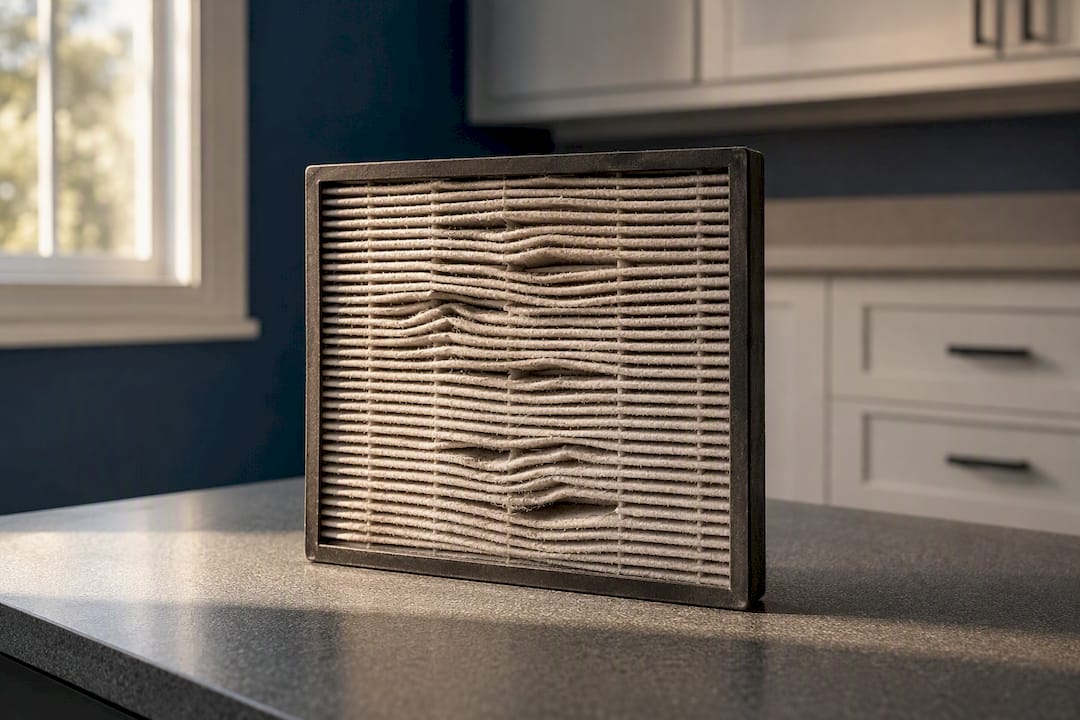
Watch for three real-world signals instead: reduced airflow from the outlet, a musty or stale smell when the unit runs, and visible grey or brown discolouration across the pleats. Seasonal pollen spikes and damp winter months both accelerate loading, so it is worth a quick check after a high-pollen week or a damp spell, even outside your usual schedule.
Can you wash or reuse an air purifier filter?
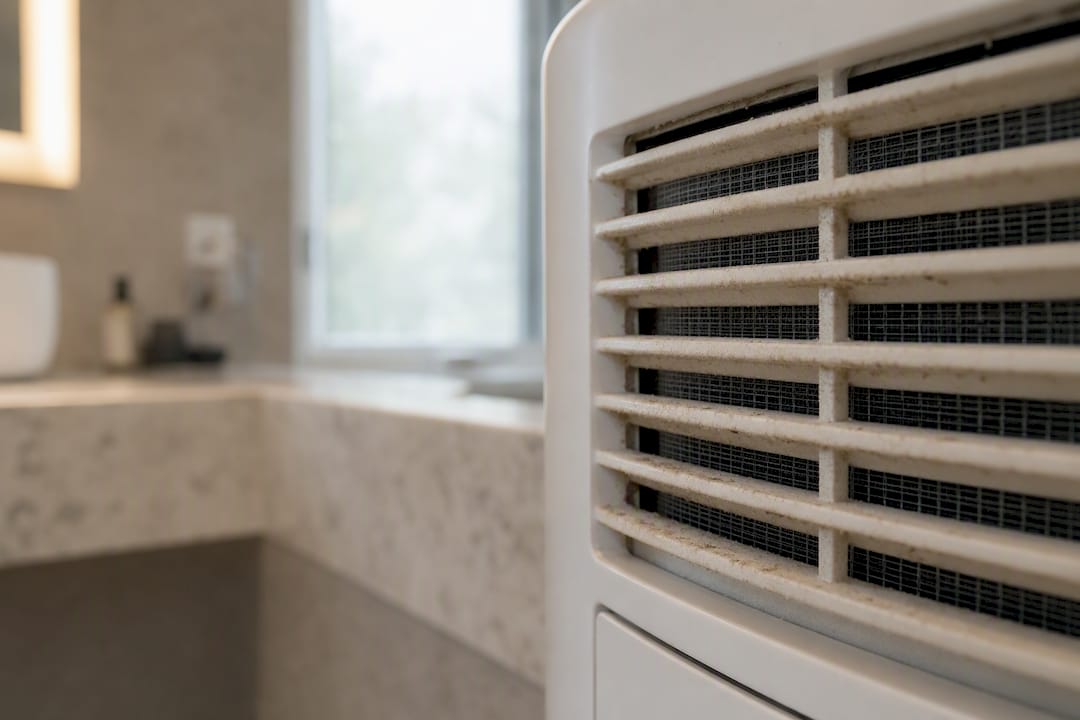
No, not the true HEPA core. Water damages the fine pleated fibres that trap sub-micron particles, reducing filter efficiency permanently even if the filter looks visually clean afterward. Therefore, most HEPA filters are intended for single use only, as advised by industry experts.
What you can wash is the pre-filter, and doing so properly is genuinely worth the five minutes:
- Vacuum loose dust and hair off first, using a low suction setting.
- Rinse under cold running water only if your manufacturer confirms the pre-filter is washable.
- Shake off excess water and leave it to dry completely, ideally overnight, before refitting.
- Never refit a damp filter; trapped moisture encourages mould growth inside the housing.
Marketing terms like “washable HEPA” should be interpreted cautiously, as testing on washable filter media indicates these filters generally trade off fine-particle filtration efficiency for the ability to be washed, making them better suited for capturing larger particles like dust and hair rather than fine smoke or allergens.
Pro Tip: If you’re tempted to vacuum a true HEPA filter to squeeze out another month, don’t. Reviewers who tested this found vacuuming distorts the pleats and creates tiny gaps that let particles straight through, which defeats the point of having HEPA in the first place.
How do you change an air purifier filter safely?
Replacing a filter takes ten minutes and doing it in the right order stops dust going everywhere and keeps the new filter seated correctly.
- Unplug the unit and set it on a wipeable surface, such as a kitchen worktop covered in newspaper.
- Open the filter housing and note the airflow arrow printed on the old filter, which shows which way air should pass through.
- Remove the old filter and bag it immediately in a plastic bag to stop dust dispersing into the room.
- Check the housing itself for dust build-up and wipe it out with a dry cloth before fitting anything new.
- Fit the new filter with the airflow arrow facing the same direction as before, and press it firmly into place.
- Wash your hands, then run the unit on its highest setting for 20 to 30 minutes to clear any manufacturing dust from the new media.
- Dispose of the old filter with household waste, following the guidance below on proper disposal.
This sequence mirrors the process recommended by practical UK guides on changing purifier filters, and skipping the airflow-arrow check is the most common mistake people make.
What should you check before buying a replacement filter?
Getting the wrong filter is the single most common waste of money in this category, and it is entirely avoidable with a two-minute check before you order.
- Confirm the exact model number of your purifier, not just the brand name, since one manufacturer often makes several units with different filter sizes.
- Measure the old filter’s dimensions and frame type if the model number isn’t printed anywhere accessible.
- Look for a stated HEPA class (H13 or H14) backed by BS EN 1822 / EN ISO 29463 test data rather than a vague “99% efficient” claim with no standard attached.
- Check whether carbon is bonded into the same filter or sold as a separate layer, since replacement cost differs depending on the design.
- Decide between genuine manufacturer filters and reputable third-party alternatives. Genuine parts guarantee fit and tested performance; cheaper third-party filters can work well for pre-filters and carbon layers, but independent testing has found budget HEPA alternatives underperforming on fine-particle capture compared with originals.
For background on how filtration technology has developed, the technical overview of HEPA air purifier tech is a useful primer before you commit to a specific class.
How can you make a filter last longer?
A handful of small habits add real months to a filter’s working life, and none of them cost anything beyond a bit of routine attention.
- Vacuum the pre-filter every two to four weeks; go fortnightly if you have pets, monthly if you don’t.
- Keep the unit out of kitchens, where cooking grease clogs media far faster than ordinary household dust.
- Avoid running the purifier right next to an open window facing a busy road, which forces the filter to work overtime on traffic particles it could otherwise avoid.
- Run the unit on its highest setting for half an hour once a week to purge accumulated particles from the intake.
Pro Tip: A weekly high-power purge draws more current and runs noisier, so time it for when you’re out of the room rather than trying to work or sleep through it. Placement genuinely changes filter loading too, and Simcodirect’s guide to air purifier placement covers the spots that reduce strain on the filter without sacrificing airflow.
Why trust this guidance, and where can you read more?
Simcodirect has sold washroom, heating, and air treatment products for years, backed by fast UK delivery and a straightforward 30-day returns policy on eligible items. That retail experience, combined with published NHS guidance on HEPA classification, shapes the recommendations above rather than marketing copy from any single filter brand.
For readers who want to go deeper on specific decisions:
- How CADR affects filter choice and replacement frequency
- The science behind HEPA filtration benefits in UK homes
- Best placement for maximum airflow and filter life
What matters most when it comes to filter maintenance?
The industry’s obsession with timer lights and hour-counters has convinced a lot of people they need a new filter on a fixed schedule, when the honest answer is that your nose and your eyes are better instruments than any indicator light on the unit. A filter that has done light duty for eight months in a clean flat is not the same as one that has sat behind a wood burner for the same period, and no timer distinguishes between them.
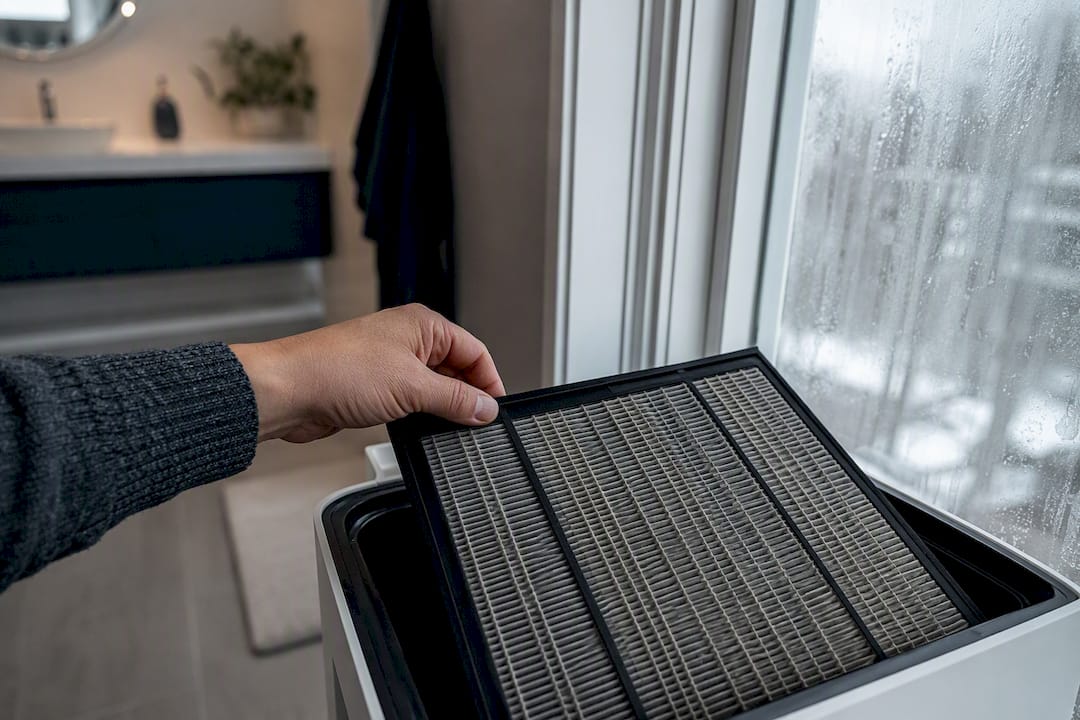
Where conventional advice really falls short is in treating HEPA and pre-filter maintenance as one task. They’re not. The pre-filter is the workhorse you should be cleaning constantly; the HEPA core is the expensive, delicate part you should be protecting by keeping that pre-filter clean, not by attempting to wash or vacuum it yourself.
If you take one thing from all of this, prioritise the cheap, boring habit: pull the pre-filter out every few weeks and give it five minutes with a vacuum nozzle. It does more for air quality, and for your wallet, than any amount of fretting over exact replacement dates.
— Carl
Where to buy purifiers and filter accessories
If your unit is ageing rather than just due a filter, or you’re weighing up whether to replace the whole purifier alongside your heating setup this year, Simcodirect sells air treatment products and related accessories with fast delivery and a straightforward 30-day returns policy, so there’s no risk in trying a new unit for your home.
Beyond purifiers, Simcodirect’s range covers the practical side of keeping a home comfortable through winter, including electric heaters like the Consort LST Free Standing Fan Heater for quick supplementary warmth in rooms where a purifier runs constantly. If you’re pairing air quality improvements with a heating upgrade, the Dimplex Q-Rad RF Panel Radiator offers smart electric heating that works well alongside continuous purifier use in a bedroom or living space. For guidance on getting placement and airflow right before you buy anything, read Simcodirect’s breakdown of CADR and what it means for filter choice, then browse the full range at Simcodirect to see current stock and delivery times.
Sources
- Application of high efficiency particulate air (HEPA) filter devices for air cleaning in healthcare spaces: guidance and standards
- Are washable air purifier filters worth it? | Clean Air Critic