


Bathroom heating zones explained: the UK homeowner's guide
UK electrical regulations divide every bathroom into distinct zones, each with its own rules about what heating equipment you can install and how it must be wired. Get the zones wrong and you risk a failed inspection, a voided insurance policy, or worse. The governing standard is BS 7671, the IET Wiring Regulations, and it applies to every bathroom in England, Scotland, Wales, and Northern Ireland.
What are bathroom heating zones and why do they matter?
Bathroom heating zones are defined areas within a bathroom, each classified by how close they are to water sources such as a bath, shower tray, or shower head. The closer the zone to water, the stricter the electrical rules. BS 7671 recognises four distinct zones:
- Zone 0: The interior of the bath tub or shower tray itself
- Zone 1: The area directly above the bath or shower, up to a specific height defined by regulations (or higher if the shower head is fixed above that level)
- Zone 2: A band extending 0.6m horizontally beyond the edge of Zone 1
- Outside zones: Anywhere in the bathroom beyond Zone 2
The purpose of this system is straightforward: water and electricity are a dangerous combination, and the zones create a clear framework for managing that risk. Every heating appliance, light fitting, and electrical accessory must carry an IP (Ingress Protection) rating appropriate to the zone where it sits. RCD (residual current device) protection at 30mA is mandatory across all bathroom circuits without exception. Understanding these boundaries before you buy a single fitting saves you from costly remedial work later.
How each bathroom zone is defined in detail
The zone boundaries are more specific than most homeowners expect, and the measurements matter for compliance.
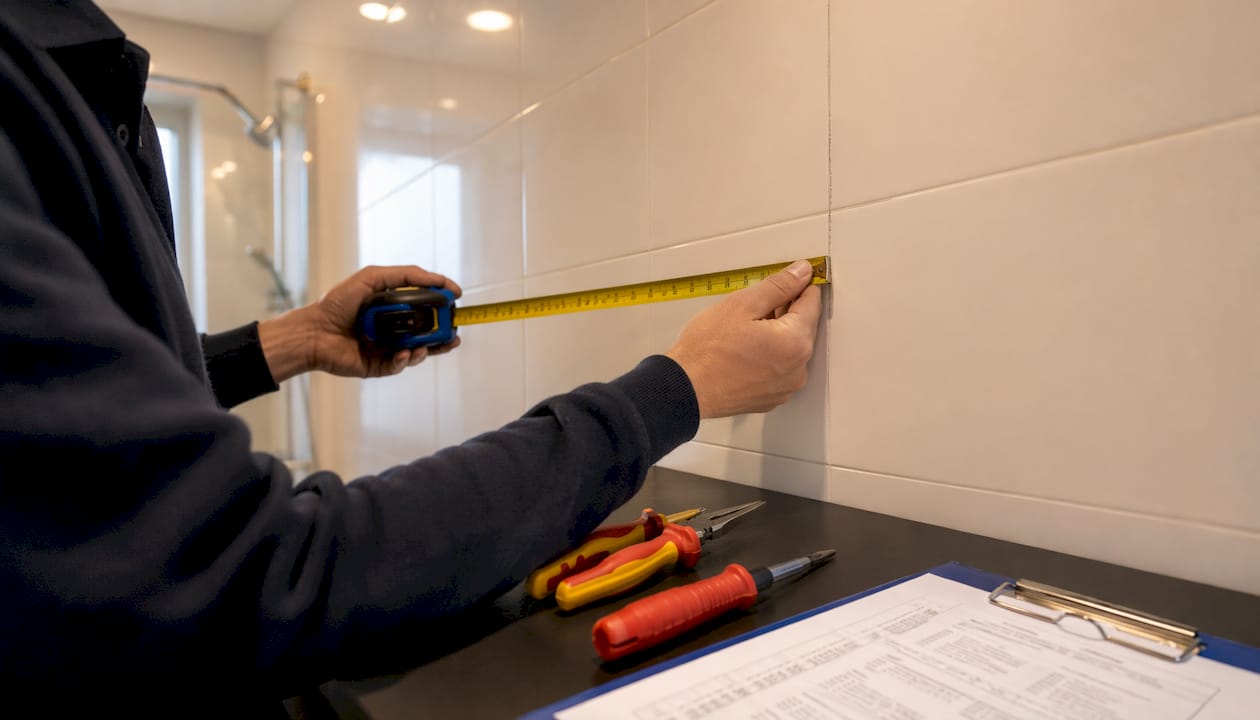
Zone 0 is the inside of the bath or shower basin. Any electrical equipment here must operate on SELV (Separated Extra-Low Voltage) at no more than 12V AC or 30V DC and carry a minimum IPX7 rating, meaning it can withstand temporary immersion. In practice, very few heating appliances belong here. Waterproof LED lighting strips designed for bath use are about the only realistic option.
Zone 1 extends vertically from the floor to 2.25m, or to the height of the shower head if it is fixed above that level, and horizontally covers the footprint of the bath tub or shower tray. For showers without a tray or basin, Zone 1 extends 1.2m horizontally from the centre point of the fixed shower head. This is where you might find a permanently wired electric shower, a wall-mounted towel rail, or an infrared panel heater, provided each carries at least IPX4 protection.
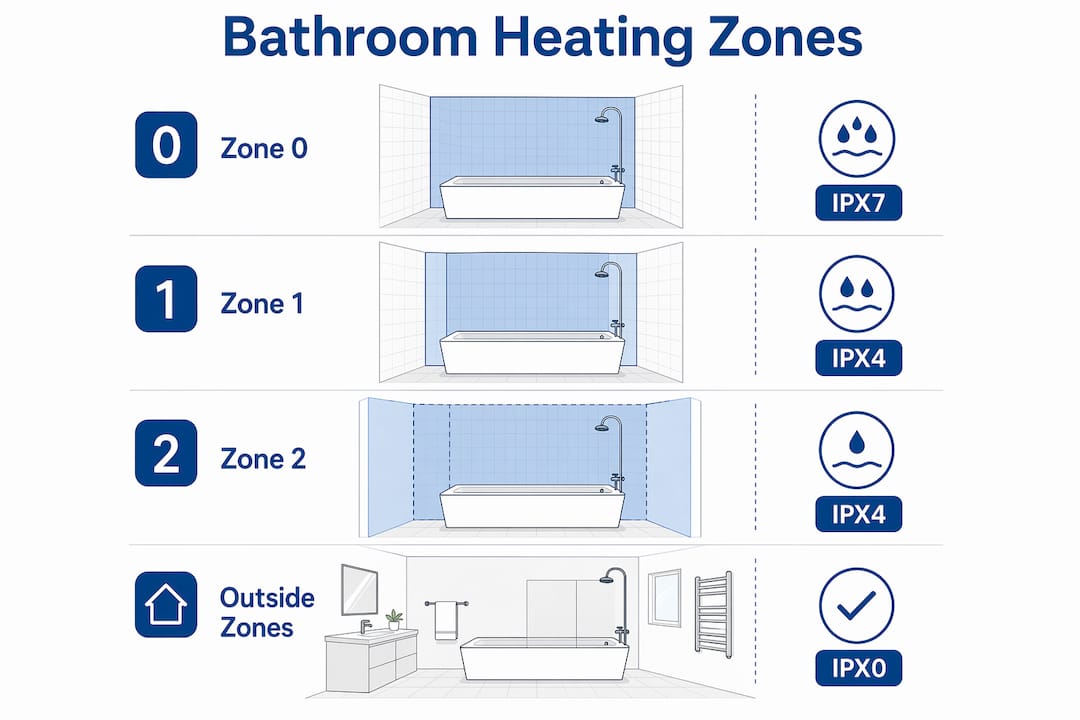
Zone 2 runs a short distance from the outer edge of Zone 1 outward. The minimum IP requirement drops to IPX4, but the zone still demands care. Fixed electric towel rails and wall heaters are permitted here if correctly rated and wired. Note that for showers without a tray, no Zone 2 exists at all; the classification jumps straight from Zone 1 to outside zones.
Outside zones cover the rest of the bathroom. Standard 230V wiring is permitted here, but socket outlets remain restricted (more on that below), and the ambient humidity still poses a risk to unrated fittings.
- Zone 0: inside bath or shower basin; SELV only; minimum IPX7
- Zone 1: above bath/shower to 2.25m height or shower head; minimum IPX4
- Zone 2: 0.6m beyond Zone 1; minimum IPX4
- Outside zones: remainder of bathroom; standard wiring permitted with restrictions
What IP ratings mean for your bathroom heating choices
The IP rating system tells you how well an electrical product resists solid particles and water. For bathroom heating, only the second digit matters: it describes the level of water protection.
- IPX4: Protected against water splashing from any direction. The minimum for Zones 1 and 2.
- IPX5: Protected against water jets. Recommended where cleaning sprays or power showers create directed water streams.
- IPX7: Protected against temporary immersion in water. Mandatory in Zone 0.
IPX4 is the minimum required in Zones 1 and 2, while IPX7 is mandatory in Zone 0. A heated towel rail rated IPX4 is fine on the wall above your bath; the same rail with no IP rating at all is a compliance failure. Always check the product datasheet before purchasing, not just the marketing description.
Even outside formal zones, IPX4-rated fittings are advisable throughout the bathroom. Steam and condensation degrade unrated components over time, and a bathroom that looks dry still carries persistent humidity that ordinary electrical fittings were not designed to handle.
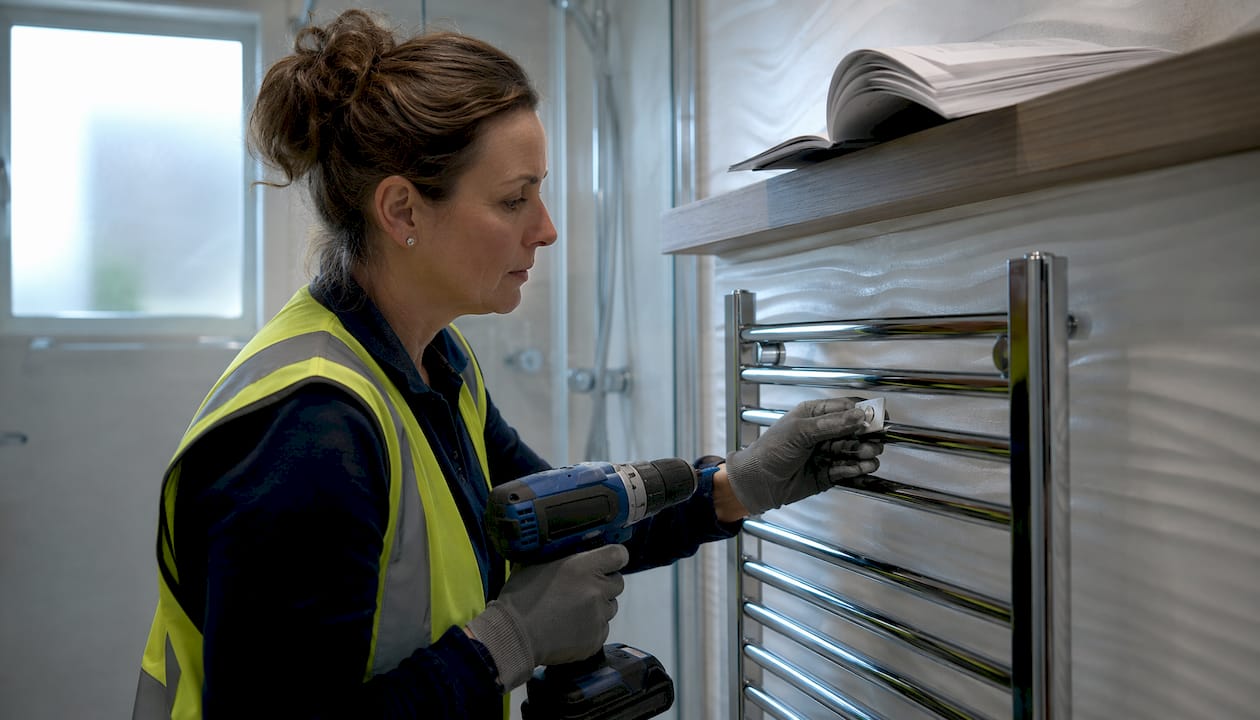
Pro Tip: When buying any bathroom heater or fitting, look for the IP code printed on the product label or in the technical specification, not just on the packaging. If a supplier cannot provide the IP rating, treat the product as unrated.
UK safety regulations every homeowner must know
The electrical rules for bathrooms go beyond IP ratings. BS 7671 Regulation 701.411.3.3 requires 30mA RCD protection on every circuit serving a bathroom containing a bath or shower, covering lighting, electric showers, towel rails, and all other fittings. There are no exceptions.
Building Regulations Part P governs notifiable electrical work in bathrooms. Installing a new circuit, replacing a consumer unit, or making additions to existing circuits within a special location (which includes the zone areas around a bath or shower) all require notification to Building Control. Replacements like swapping a hardwired towel rail in the same position may not need notification, but the work must still comply fully with BS 7671.
Socket outlets are heavily restricted. A standard 230V socket must be located a safe distance horizontally from the edge of Zone 1. Shaver sockets conforming to BS EN 61558-2-5 are the one permitted exception closer to the bath or shower, and even those must sit outside Zone 1.
Isolation switches for extractor fans with timer or overrun functions must be triple-pole (interrupting line, neutral, and switched line) and located outside all bathroom zones. This is a detail many DIY installations get wrong.
- All bathroom circuits require 30mA RCD protection
- New circuits and alterations in special locations are notifiable under Part P
- Socket outlets must be at least 3m from Zone 1
- Isolation switches must be triple-pole and outside bathroom zones
- Use a registered electrician for all notifiable work
Pro Tip: Place your isolation switch on the landing or in a hallway outside the bathroom door. It keeps the switch accessible for maintenance and keeps you on the right side of BS 7671 at the same time.
Choosing and installing bathroom heating safely
Portable electric heaters pose a severe electrocution risk in bathrooms and should never be used there. Fixed, permanently wired heating is the only safe and compliant approach. The type of heater you choose depends on the zone, the IP rating, and how the room is wired.
For Zone 1 and Zone 2 installations, wall-mounted electric towel rails and infrared panel heaters are the most practical options, provided they carry at least IPX4 protection and are hardwired rather than plugged in. If you are considering radiant floor heating, underfloor heating mats designed for wet areas are a popular choice; they sit beneath tiles and connect to a thermostat outside the zone. The Simcodirect range includes the Levante Slimline Tubular Heater, a compact, IP-rated option suited to bathroom zones, and the Dimplex TTR Electric Towel Radiator, which combines compliant wiring with practical warmth.
Common installation mistakes worth avoiding:
- Installing a heater with no IP rating in Zone 1 or Zone 2
- Using a plug-in heater anywhere in the bathroom
- Placing a socket outlet within 3m of the bath or shower
- Fitting a single-pole isolation switch instead of a triple-pole unit
- Failing to notify Building Control when installing a new circuit
Registered electricians provide the expertise to certify that bathroom heating installations meet Part P and BS 7671. For any notifiable work, using a registered competent person means they can self-certify the installation, saving you the cost and delay of a separate Building Control inspection. For guidance on controls and thermostats that work alongside your heating system, the heating system controls guide covers the key options for UK homeowners.
Simcodirect stocks a range of zone-compliant bathroom heaters, towel rails, and accessories, all available with fast UK delivery and a 30-day returns policy. Browse the full selection at simcodirect.co.uk.
Key takeaways
Bathroom heating zones, defined by BS 7671, determine which electrical heating products are safe and legal in each part of your bathroom.
| Point | Details |
|---|---|
| Four zones govern every bathroom | Zones 0, 1, 2, and outside zones each carry distinct rules on voltage, IP rating, and permitted appliances. |
| IP ratings are non-negotiable | IPX7 is mandatory in Zone 0; IPX4 is the minimum for Zones 1 and 2; IPX4 is advisable even outside formal zones. |
| 30mA RCD protection is universal | Every circuit in a bathroom with a bath or shower requires 30mA RCD protection under BS 7671 Regulation 701.411.3. |
| Part P applies to new circuits | Installing a new bathroom circuit or altering one in a special location requires Building Control notification. |
| Fixed wiring only | Portable electric heaters must never be used in bathrooms; permanently wired, IP-rated appliances are the only compliant option. |