


£30–£100 a year: Boiling water tap running costs for UK homes
A boiling water tap typically costs over £30 a year to run in a UK home, mostly down to standby heating rather than the water you actually draw off. Whether that beats a kettle depends entirely on how much boiling water your household gets through each day, plus the filter and servicing costs that rarely make it into the sales brochure.
TL;DR:
- Boiling water taps typically consume between 10 W and 40 W on standby, with annual costs ranging from about £30 for light use to over £100 for heavy daily demand.
- Reheating water uses about 0.10 kWh per litre, meaning a household drawing 4 litres daily can expect around £58 annually in electricity costs.
- Costs from filters and descaling can add hundreds of pounds over several years, especially in hard water areas, impacting overall ownership expenses.
- Kettles remain more energy-efficient for low or irregular use households, with a daily demand below roughly 20 mugs, making them cheaper unless daily boiling demand is high.
- Proper installation, mindful usage habits, and water hardness checks are essential for keeping boiling water tap running costs low and prolonging its lifespan.
Table of Contents
- How boiling water taps use electricity: standby, reheating and dispensed energy
- Typical running-cost examples for UK households
- Boiling water tap versus kettle: when does the tap actually win?
- Other ownership costs: filters, descaling, servicing and installation
- How to estimate your own running costs
- Practical tips to cut running costs and prolong lifespan
- Simco Direct’s take: total cost over headline price
- Where Simco Direct fits into your next kitchen upgrade
- Sources
- FAQ
How boiling water taps use electricity: standby, reheating and dispensed energy
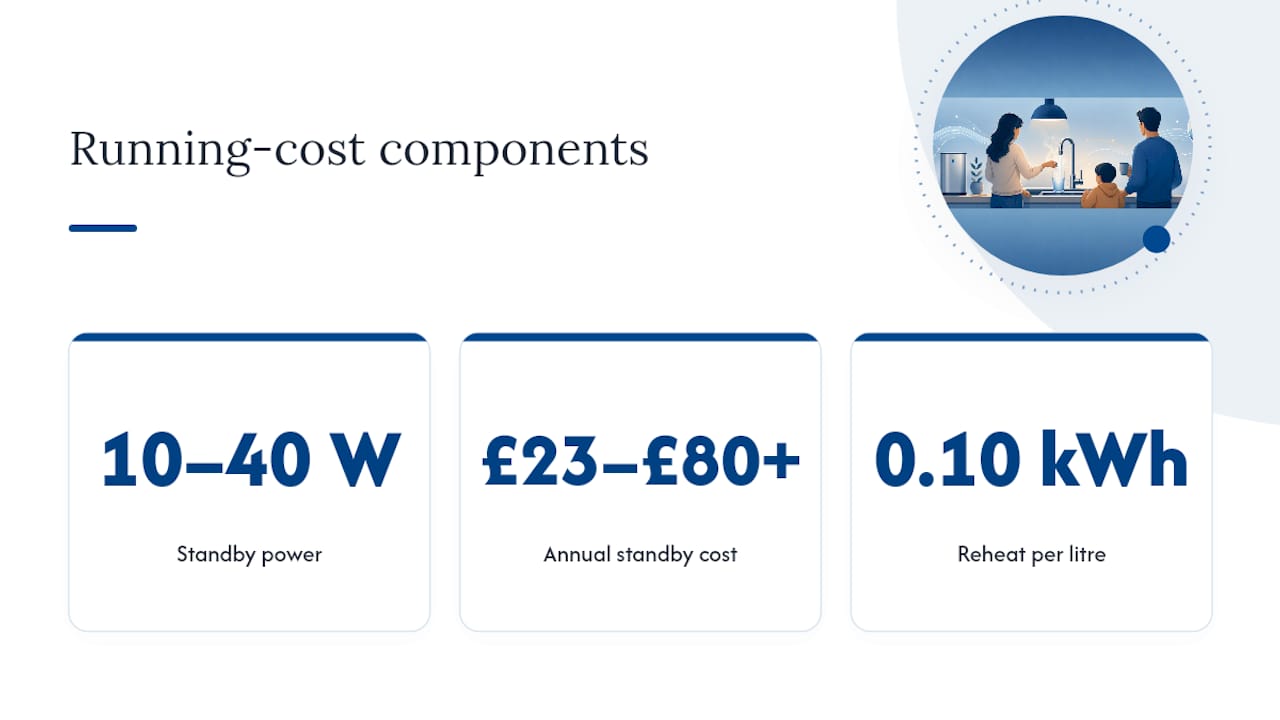
A boiling water tap spends most of its life doing nothing except keeping a small tank hot, and that idle draw is where most of the annual cost comes from. Standby wattage typically sits between 10 W and 40 W depending on the model and how well the tank is insulated. Run that lower figure for a full year (8,760 hours) and you get roughly £23 at £0.27 per kWh; the higher end can push standby costs alone above £80 a year, according to the Boilingwatertap.
On top of that sits the energy needed to reheat water after you draw some off. Physics gives a fairly fixed figure here: heating a litre of water from a cold mains temperature to boiling takes about 0.10 kWh, regardless of brand. So the more litres you draw and refill, the more this “usage” component grows relative to standby.
Insulation quality and tank size explain most of the spread between models. A well insulated 3 litre tank loses heat slowly and reheats less often; a poorly sealed unit with a bigger tank works harder around the clock, even if nobody in the house touches it that day.
Typical running-cost examples for UK households
Numbers make this much easier to picture. Using a representative electricity price of around 24.86p per kWh, Ideal Home’s worked example puts a 1,600 W tap with a 3 litre tank at roughly £36.50 a year for moderate use, once you combine standby draw and the cost of reheating after each draw.
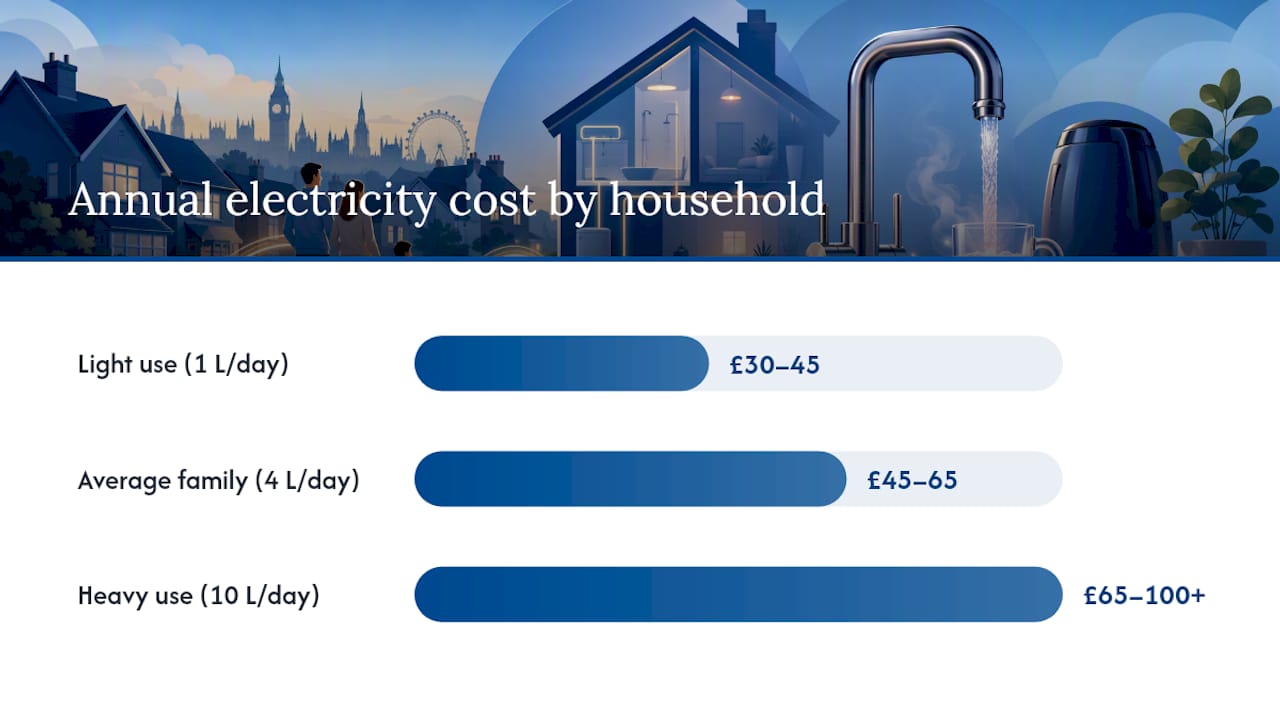
Scale that against three rough household profiles:
- Light use (around 1 litre a day, one person): mostly standby cost, likely £30 to £45 a year.
- Average family (around 4 litres a day): standby plus modest reheating, typically £45 to £65 a year.
- Heavy use (around 10 litres a day, big household or home office): usage cost climbs noticeably, often £65 to £100+ a year.
These figures cover electricity only. They exclude filter cartridges, descaling and servicing, which change the total cost picture considerably and are covered next.
Boiling water tap versus kettle: when does the tap actually win?
Kettles are genuinely efficient appliances, converting roughly 85% to 90% of the electricity they draw straight into heat. The real waste comes from habit, not hardware: filling the kettle well beyond what you need. Cutting that overfilling by around a fifth can save a typical household somewhere in the region of £10 to £13 a year, according to figures referenced by Ideal Home’s kettle comparison.
So where’s the crossover point? Independent analysis from GetEnergySavvy suggests even an efficient tap needs daily demand of roughly 20 to 23 mugs before it clearly beats a well-used kettle on running cost alone. Below that, standby losses tend to cancel out the convenience.
Signals worth weighing:
- Tap tends to make more sense for: large households, frequent cooking and baking, home offices with a steady stream of tea and coffee requests.
- Kettle tends to make more sense for: single occupants, low and irregular use, or households already careful about overfilling.
Other ownership costs: filters, descaling, servicing and installation
Electricity is only part of the bill. Filter cartridges usually need replacing every three to six months, and UK households in hard water areas often churn through them faster, pushing annual filter spend into the tens to hundreds of pounds depending on the brand, as brand comparison data from Boilingwatertap.com shows.
Add descaling and periodic servicing on top:
- Filter cartridges: typically £30 to £90 a year, more often in hard-water regions.
- Descaling and servicing: varies by brand and water hardness, with hard water areas seeing meaningfully higher wear.
- Installation and purchase price: spread (amortised) over a realistic 5 to 10 year lifespan, this softens the annual hit considerably but still belongs in any honest payback calculation.
Anyone weighing this up seriously should read a proper boiling water tap installation guide before assuming the fitting cost is trivial, particularly in older kitchens.
How to estimate your own running costs
You don’t need an engineering degree to get a decent personal estimate. Work through it in order:
- Find your electricity price in pence per kWh from a recent bill, and check your local water hardness with your supplier.
- Decide roughly how many litres of boiling water your household draws off each day.
- Multiply your tap’s standby wattage by 8,760 hours, then convert to kWh and multiply by your price per kWh.
- Multiply your daily litres by 0.10 kWh, by 365 days, then by your price per kWh, to get annual heating cost.
- Add a filter and servicing allowance based on your water hardness.
Statistic Callout: The 0.10 kWh per litre heating figure is the backbone of most UK boiling tap calculators, including the one from Boilingwatertap.com, and it’s worth memorising if you want to sanity check any brand’s own cost claims.
A household using 4 litres a day at 27p/kWh, with a 25 W standby tap, lands close to £58 a year before filters. That’s a fair mid-range estimate for a typical family kitchen.
Practical tips to cut running costs and prolong lifespan
Switching a tap off entirely for a fortnight’s holiday saves a little, but don’t expect dramatic numbers. Most of the saving comes from standby avoided during that window, not from anything cumulative.
Habits matter more day to day:
- Only dispense the volume you actually need rather than filling a mug to the brim out of habit.
- Don’t over-order filters “just in case”; replace on the manufacturer’s schedule, not earlier.
- Descale on time. Skipping it in hard water areas shortens the heater’s working life and can quietly push standby draw higher.
- Site the unit away from draughty cupboards where possible; poor ambient conditions make the tank work harder to hold temperature.
Pro Tip: Check your local water hardness directly with your water supplier rather than guessing. It takes two minutes and tells you whether you’re likely at the low or high end of the filter and descaling cost range.
Simco Direct’s take: total cost over headline price
The number that matters isn’t the tap’s sticker price. It’s standby draw, your daily litres, and how hard your local water is, all added together over several years. Get those three right and a tap can be a sound, low-fuss upgrade; ignore them and you’ll be disappointed by year two. For anyone fitting one, our installation guide covers the practical checks worth doing first.
— Carl
Where Simco Direct fits into your next kitchen upgrade
A range of boiling water taps, hand dryers, towel radiators and electric heaters are available online, with UK delivery and a straightforward 30-day returns policy offered by some retailers. If you’ve worked through the running cost estimate above and you’re ready to compare models properly, our best boiling water taps guide is a sensible next stop, and it’s worth checking WRAS approval before you commit to a fitting.
Once you’ve settled on a model, browse the current range and get a delivery estimate at Simcodirect.
Sources
- How much does it cost to run a boiling water tap — and how much electricity do they use? | Ideal Home
- Boilingwatertap
- Instant boiling water taps…transparent costs for the first time | GetEnergySavvy
FAQ
How much electricity does a boiling water tap use?
Most units draw between 10 W and 40 W on standby, plus around 0.10 kWh per litre when heating water after a draw, according to figures used in Boilingwatertap.com’s calculator.
How much does a boiling water tap cost to run in the UK?
Typical annual electricity costs range from around £35 for light use up to £100 or more for heavy daily use, with a 1,600 W tap and 3 litre tank example costing roughly £36.50 a year according to Ideal Home.
How much does it cost to run a boiling water tap per day?
Daily cost varies with standby wattage and how many litres you draw, but for a moderate use household it typically works out to roughly 10p to 25p a day once standby and reheating are combined.
How much does it cost to boil 500ml of water in a kettle?
Using the 0.10 kWh per litre heating figure, boiling half a litre costs roughly a fraction of a penny at typical UK electricity prices, assuming an efficient kettle and no overfilling.
Is a boiling water tap cheaper than a kettle?
Only for households with high daily demand, roughly 20 mugs or more, according to independent analysis from GetEnergySavvy; below that threshold, a carefully used kettle usually costs less overall.