


Homeowners: 6 Point Checklist to Choose a Column or Panel Radiator
Choose a panel radiator for fast warm-up in small or single-use rooms, and a column radiator when you want a period look or heat that lingers after the boiler stops firing. For raw output per metre of wall, a Type 22 panel usually beats a column of the same size. Whatever you pick, check the published wattage at the same delta‑T before comparing prices, and read the sizing section below before you order anything.
TL;DR:
- Column radiators provide longer warmth retention and smoother boiler cycling but are heavier, more expensive, and require careful pipe fitting adjustments.
- Panel radiators heat faster, are more budget-friendly, and are better suited for short-use rooms, though they cool quickly once the system turns off.
- Accurate heat-loss calculations and matching radiator output at delta‑T 50 are essential for proper sizing, as external dimensions alone can be misleading.
- Heat sources like heat pumps favor panel radiators, which perform better at lower flow temperatures, while column radiators suit steady background heating needs.
- Proper maintenance, including bleeding and system flushes, is crucial for both types, and mixing radiator styles in a home often yields optimal performance based on room use.
Table of Contents
- Column vs panel radiator: the quick comparison
- How column radiators work and what that means in practice
- How panel radiators work and what the Type numbers mean
- Heat output and sizing: comparing like with like
- Efficiency, response time and boiler compatibility
- Costs and installation practicalities
- Aesthetics, finishes and which rooms suit which radiator
- How to choose: a checklist and questions to ask your supplier
- Maintenance and common issues to expect
- About this guide
- Editor’s perspective: when we’d choose a column over a panel
- How Simcodirect can help you choose the right radiator
- Sources
Column vs panel radiator: the quick comparison
Before you get into thermal mass and delta‑T figures, it helps to see where each type wins and where it doesn’t.
Column radiators:
- Strong radiant heat and a traditional or industrial look that suits period properties and feature walls
- Retain warmth after the boiler cycles off, thanks to the extra water volume trapped in each column
- Heavier, often pricier for the same output, and can underperform a Type 22 panel on output per metre width
Panel radiators:
- Warm up quickly and use less water, so they respond faster to thermostat changes
- Lighter, cheaper to buy and fit, and available as slimline Type 11 (single panel) through to bulky Type 33 (triple panel, triple convector)
- Less thermal mass means they cool down faster once the heating stops, and some flatter designs offer little visual interest
Column counts on modern column radiators typically run from two to four columns deep, which affects both output and how far the radiator projects from the wall. Whichever style you’re drawn to, always check the wattage or BTU figure at the same delta‑T (usually delta‑T 50) rather than trusting dimensions alone.
How column radiators work and what that means in practice
A column radiator is essentially a stack of vertical tubes, welded or bolted between top and bottom manifolds, so hot water flows up through one set of columns and back down through another. Most are built from steel, though you’ll also find aluminium versions (lighter, faster to heat) and cast-iron-style reproductions designed to mimic Victorian originals without the weight of actual cast iron.
That extra tube volume is the whole story here. More metal and more water inside means more thermal mass, which changes how the radiator behaves at both ends of a heating cycle. It takes longer to reach full temperature, but once it’s hot, it keeps releasing warmth for a noticeably longer stretch after the boiler switches off. In a room where you want steady background heat rather than quick bursts, that lag works in your favour.
There’s a knock-on effect for your boiler, too. Because column radiators hold more water, they can smooth out the short on/off bursts that trigger boiler short-cycling, particularly useful with older, non-modulating boilers that struggle with very small heat loads.
None of this comes free, though. A large multi-column radiator can weigh considerably more than a panel radiator of similar height and width, which matters the moment you’re drilling into plasterboard or a stud wall rather than solid masonry. You’ll often need heavier-duty wall brackets, sometimes additional floor-standing feet on bigger models, and you must check pipe centres carefully. Column radiators frequently come with different centre-to-centre spacing than the panel radiator they’re replacing, so swapping one for the other isn’t always a straight like-for-like fit without adjusting pipework.
How panel radiators work and what the Type numbers mean
Strip a panel radiator back and you’ve got one or two flat steel panels, sometimes with a folded convector fin sandwiched between or behind them to push more air across a hot surface and boost heat output. That fin is the main reason panel radiators lean on convection rather than radiant heat.
The Type number tells you exactly what’s inside. Type 11 is a single panel with a single convector fin. Type 21 pairs two panels with one fin. Type 22 gives you two panels and two fins, and Type 33 stacks three panels with three fins for maximum output in a compact footprint. Moving from a Type 11 to a Type 22 at the same external height and width roughly doubles the output, because you’ve effectively doubled the convective surface area without taking up any extra wall space.
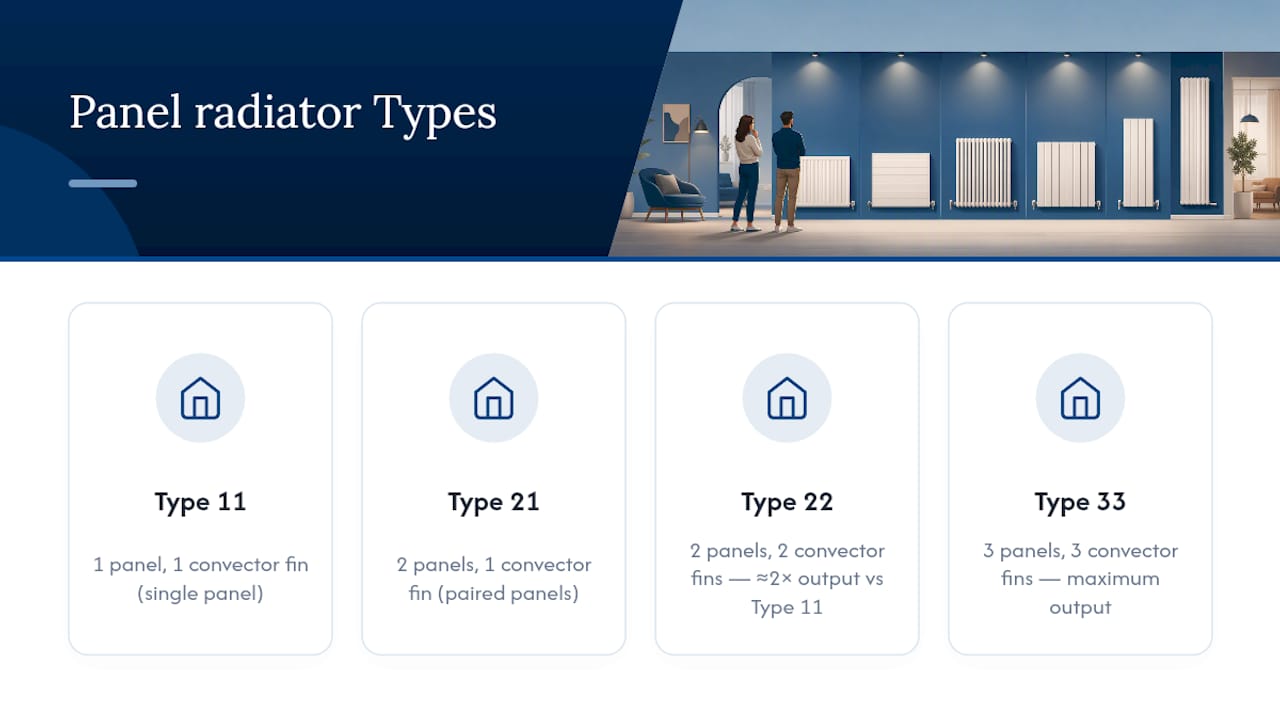
That’s a genuinely useful trick if your wall space is tight but your heat-loss calculation says you need more watts. Rather than fitting a wider or taller radiator, upgrading the Type number gets you there within the same footprint, which is one of the more overlooked column vs panel heating decisions homeowners face when a room feels chronically under-heated.
Panel radiators reach operating temperature faster than column radiators largely because they hold less water and depend more heavily on convection to move heat into the room. That makes them the practical pick for rooms you use in short bursts, like a home office you only heat for a few hours, or a spare bedroom that needs to warm up fast before a guest arrives. The trade-off is the same lower thermal mass working against you once the heating switches off: panels give that heat up again quickly, so the room cools faster too.
Heat output and sizing: comparing like with like
The single biggest mistake homeowners make when comparing column vs panel radiator options is judging output by eye, or worse, by price. Radiator output is tested and published under BS EN 442, the British and European standard that rates radiators at a fixed water-to-room temperature difference, most commonly delta‑T 50 (a 50°C gap between average radiator water temperature and room air temperature). Two radiators of identical external dimensions can have wildly different outputs depending on their Type or column count, so the only fair comparison is watts (W) or BTU/hr at the same delta‑T figure. Anything else is guesswork.
Once you know the standard you’re working to, sizing becomes a straightforward calculation rather than a guessing game. Room heat loss depends on floor area, ceiling height, window size and glazing, insulation levels, and how exposed the room is (an end wall facing north loses more heat than an internal wall). As a rough starting point, a well-insulated small bedroom of around 10 square metres might need somewhere in the region of 800 to 1,200 watts, a typical living room of 20 to 25 square metres often needs 1,500 to 2,500 watts, and a large, poorly insulated period lounge with high ceilings can easily demand upwards of 3,000 watts. These are ballpark figures only; every room is different, which is exactly why a proper heat-loss calculation beats a rule of thumb.
Simcodirect’s own radiator size guide walks through that calculation step by step, and it’s worth running before you commit to either a column or panel model, because the answer often changes which Type or column count you actually need.
Once you have your target wattage, the practical question becomes which radiator gets you there within your available wall space. A Type 22 convector panel radiator can match or even exceed the output of a multi-column radiator of similar external dimensions, so don’t assume a chunky column radiator automatically outperforms a slimmer panel. If you’re asking “are column radiators efficient” purely on an output-per-pound basis, in many cases the answer is no, a well-specified panel does the job in less wall space and for less money. Where columns pull ahead is in the perceived quality of heat and in retained warmth, not necessarily in raw wattage per metre width.
Pro Tip: When you’re comparing two radiators side by side in a shop or online listing, look for the delta‑T 50 figure specifically. Some budget listings quote output at delta‑T 60 or 70, which inflates the number and makes a weaker radiator look competitive with a stronger one.
Efficiency, response time and boiler compatibility
Response time and heat retention sit at opposite ends of the same trade-off, and which one matters more to you depends entirely on how you actually use the room. Panel radiators, with their lower water content, warm up quickly when you want quick heat in a room you use intermittently. Column radiators, with more water circulating through more tubes, take longer to heat but then hold that warmth for longer once the system stops firing, which suits rooms where you want steady, even background heat rather than a quick blast.
That difference matters more than most homeowners realise once you factor in the boiler. A combi or modulating boiler serving a system with lots of small, fast-cycling panel radiators can end up firing on and off more frequently than one serving radiators with higher water content, particularly in smaller zoned rooms. Frequent short cycling wears components faster and dents efficiency over the life of the boiler. Fitting thermostatic radiator valves (TRVs) on individual radiators and balancing the system properly goes a long way towards smoothing this out, regardless of which radiator you choose. A guide to valve types is worth reading if you’re not sure which valve suits your setup.
Heat pumps add another layer to the which-radiator-is-more-efficient question. Low-temperature heat pump systems run at flow temperatures well below a typical gas boiler, and panel radiators and convectors, when correctly sized, often suit these lower flow temperatures better than column radiators, which can struggle to deliver adequate output at reduced water temperatures unless they’re significantly oversized. In some heat pump installations, fan convectors, which use a small fan to push more air across the heat exchanger, are the more sensible choice over either standard radiator type, particularly in rooms with a high, fast heat demand.
Costs and installation practicalities
Panel radiators are generally the cheaper option for a given published output, largely because they use less material and simpler manufacturing. Column radiators command a premium partly for the extra steel or aluminium involved and partly for the finish, chrome, anthracite, and now an expanding range of designer colours all add to the price over a plain white panel.
Installation cost and complexity follow a similar pattern. Column radiators are heavier and can need stronger wall fixings or additional floor support, especially larger multi-column models destined for a stud wall rather than masonry. Panel radiators are lighter and generally quicker to fit, and because they’re more common, standard pipe centres are easier to match without adjusting existing pipework.
Pipe centres deserve a specific mention because they trip up more DIY installers than any other measurement. If you’re replacing an old radiator, measure the centre-to-centre distance of your existing pipe connections before ordering a replacement, whether column or panel. Getting a radiator delivered that doesn’t match your pipe centres means either extending pipework or sending it back, which eats into any money you saved by shopping around.
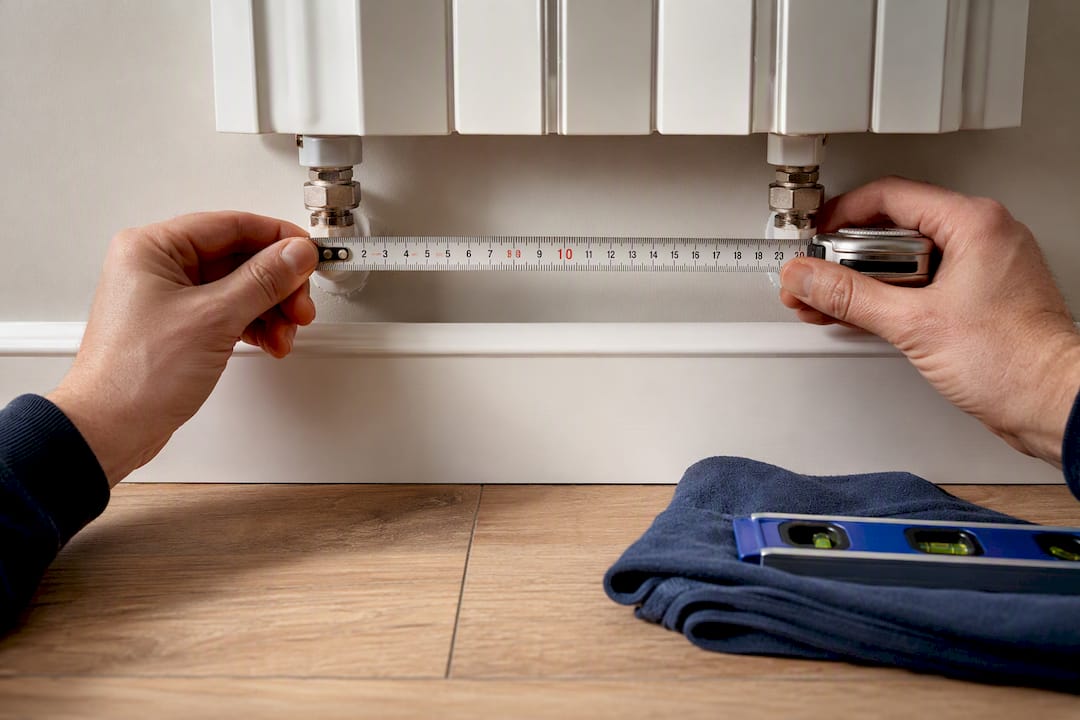
Valve choice also affects both cost and fitting time. Angled, straight, and corner valves all suit different pipe layouts, and getting this wrong is one of the most common reasons a straightforward radiator swap turns into a half-day job. Running costs are harder to generalise, since they depend far more on your boiler’s efficiency, your TRV settings, and how you actually use the room than on whether the radiator itself is a column or a panel. Anyone claiming one type is definitively cheaper to run is oversimplifying a genuinely system-dependent answer.
Aesthetics, finishes and which rooms suit which radiator
Column radiators earn their keep as feature pieces in living rooms, hallways, and period properties where a flat white panel would look out of place against cornicing, sash windows, or exposed brick. They’re the obvious choice when the radiator itself is meant to be seen and admired rather than hidden behind a sofa.
Panel radiators are the practical workhorse for spaces where the radiator isn’t the point, small bathrooms, utility rooms, box bedrooms, and anywhere a slimmer profile matters more than kerb appeal. If your hallway is narrow enough that a projecting column radiator becomes an obstacle, a low-profile panel solves the space problem without compromising on output, and Simcodirect’s guide to low profile radiators for compact rooms covers the options in more detail.
Finish choice increasingly blurs the line between the two categories. Search interest in coloured column radiators and designer finishes has been rising, which tells you homeowners are no longer treating columns as a purely period or industrial option. Anthracite, matt black, and pastel-toned column radiators now sit comfortably in contemporary kitchens and modern extensions, not just Victorian terraces. That trend cuts the other way too: if you’re drawn to a column purely for its looks, modern finishes mean you rarely have to sacrifice a contemporary aesthetic to get one, and the choice comes down more honestly to output and running behaviour than style alone.
How to choose: a checklist and questions to ask your supplier
Work through this before you order, in roughly this order of priority.
- Calculate heat loss first. Don’t guess a wattage figure, run the numbers for the specific room using a proper heat-loss calculation.
- Decide how you use the room. Short bursts (spare room, home office) favour a panel; constant background heat (living room, period lounge) favours a column.
- Measure your wall space and pipe centres. Column radiators often need more depth off the wall; panel radiators need matching centre-to-centre spacing.
- Check the fixing surface. Stud walls need appropriate brackets for heavier column radiators; confirm weight limits before you buy.
- Set your budget with output in mind, not just price per unit. A cheaper Type 11 panel that’s undersized will cost more in comfort and running costs than a correctly specified Type 22.
- Consider your heat source. If you’re on or moving to a heat pump, lean towards panel radiators or fan convectors sized for lower flow temperatures.
When you’re actually speaking to a supplier or installer, ask these questions directly:
- What’s the published output in watts at delta‑T 50, not just the BTU figure on the box?
- What are the exact pipe centres and overall weight, including packaging?
- Does the radiator conform to BS EN 442, and can you see the datasheet?
- What are the delivery timescales, and what’s the returns policy if it doesn’t fit?
Treat vague answers to any of these as a red flag. A supplier who can’t produce a BS EN 442-rated output figure or a proper datasheet on request is one you should be cautious about.
Pro Tip: If you’re torn between thermal mass and response time, think about how many hours a day the room is actually occupied and heated, not how big or grand the room feels. A large but rarely-used dining room often suits a panel radiator better than a column, purely because you don’t want to wait twenty minutes for heat you’ll only enjoy for an hour.
Maintenance and common issues to expect
Both radiator types need the same basic upkeep, and neglecting it causes identical problems regardless of whether you’ve gone for column or panel. Trapped air is the most common culprit behind a radiator that’s cold at the top but warm at the bottom, and bleeding it is a five-minute job with a radiator key. Simcodirect’s step-by-step guide to bleeding a radiator covers the safe process if you haven’t done it before.
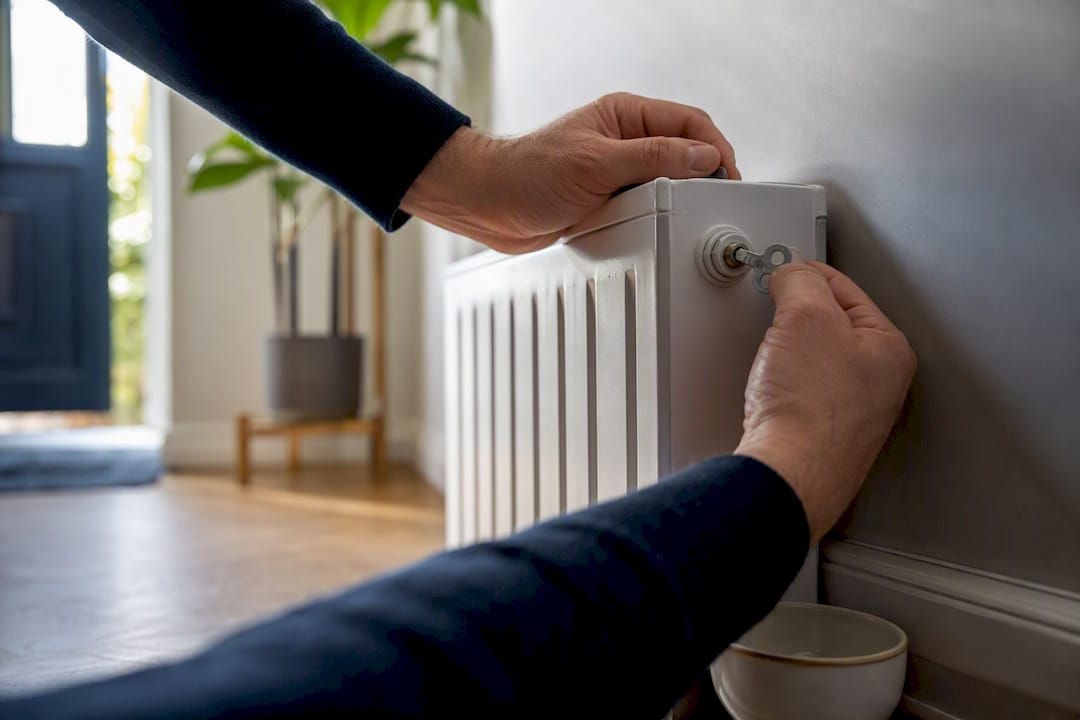
Corrosion inside the system, usually sludge building up from rust and mineral deposits, causes cold patches, banging noises, and reduced efficiency over time. This affects column radiators and panel radiators equally, though multi-column models can be slightly more prone to sludge settling in the lower tubes given their shape. TRVs occasionally stick, especially after a summer of disuse, and are worth exercising a few times a year to keep them moving freely.
If bleeding doesn’t fix cold radiators, or you’re noticing sludge, discolouration in the bled water, or persistent boiler short-cycling despite balanced TRVs, that’s the point to call in an engineer for a power flush. Trying to diagnose a system-wide sludge problem yourself rarely ends well.
About this guide
This guide was written by Carl, drawing on manufacturer technical documentation and BS EN 442 sizing standards to give homeowners a practical, standards-led way to compare column and panel radiators before they buy.
Column and panel radiators, alongside towel rails and electric heating options, are available from various retailers, often backed by fast UK delivery and a 30-day returns policy on eligible orders. That returns window matters specifically for radiators, where pipe centre mismatches are one of the most common reasons a purchase gets sent back.
Editor’s perspective: when we’d choose a column over a panel
Picture a Victorian terrace living room with high ceilings and a fireplace as the focal point. A column radiator earns its place there, both visually and because the room benefits from that lingering, radiant warmth through a long evening.
Now picture a small modern kitchen extension, used hard for an hour at breakfast and another at dinner. A slim Type 22 panel wins every time: fast to heat, fast to cool, and it doesn’t eat into limited wall space.
There’s no rule against mixing the two across one house. Fit columns where the room is lived in for hours and panels where speed and space matter more, and the whole system works harder for you rather than settling for one compromise throughout.
— Carl
How Simcodirect can help you choose the right radiator
Working through delta‑T figures and pipe centres is easier when the products in front of you already list the numbers clearly. Column and panel radiators alongside electric alternatives are stocked by some retailers, with listings that carry the output and dimension details you need to compare fairly rather than guess.

If your priority is a bathroom or wet room upgrade rather than a full living space, the designer radiators for bathrooms guide pairs well with towel rail options like the Titan Chrome Straight Towel Radiator, which suits period and contemporary bathrooms alike. For a room without existing pipework, or where running new pipes isn’t practical, the Dimplex Q-Rad RF Panel Radiator gives you panel-style convection heating on a standard plug, with the same fast UK delivery and 30-day returns policy that applies across the range. Browse the radiator range, check the published output figures against your room’s heat-loss calculation, and place your order with confidence; a mismatched fit isn’t the end of the story.
Sources
- Radiator types: panel, column, towel rail & LST | squote
- Radiator trends for UK homes: what’s shaping British interiors in 2026 - News Britania