


Why stainless steel washroom fittings outperform all alternatives
Stainless steel washroom fittings are defined as sanitary and accessory components manufactured from chromium-bearing steel alloy, offering corrosion resistance, structural strength, and a non-porous surface that prevents bacterial growth. Property developers and facility managers consistently specify stainless steel fittings because they deliver measurable advantages in durability, hygiene, and lifecycle cost that alternative materials cannot match. Demand for stainless steel bathroom fixtures has grown 18.75% yearly since 2024, driven by the prioritisation of hygiene and long-term performance over short-term purchase price. That growth reflects a clear shift in how developers and facilities teams think about washroom specification.
Why stainless steel washroom fittings resist damage and corrosion
Stainless steel’s durability comes from a passive chromium oxide layer that forms on the surface and self-repairs when scratched. This layer blocks moisture, oxygen, and cleaning chemicals from reaching the underlying metal, preventing rust even in permanently wet environments. No coating, plating, or paint is required to maintain this protection. The material performs this function for decades without intervention.
In high-traffic commercial washrooms, structural strength matters as much as surface resistance. Stainless steel sanitary ware supports loads up to 400kg and commands over 65% market share in demanding environments such as transit hubs and public facilities. That dominance reflects a practical verdict from facility managers who have compared materials under real operating conditions.
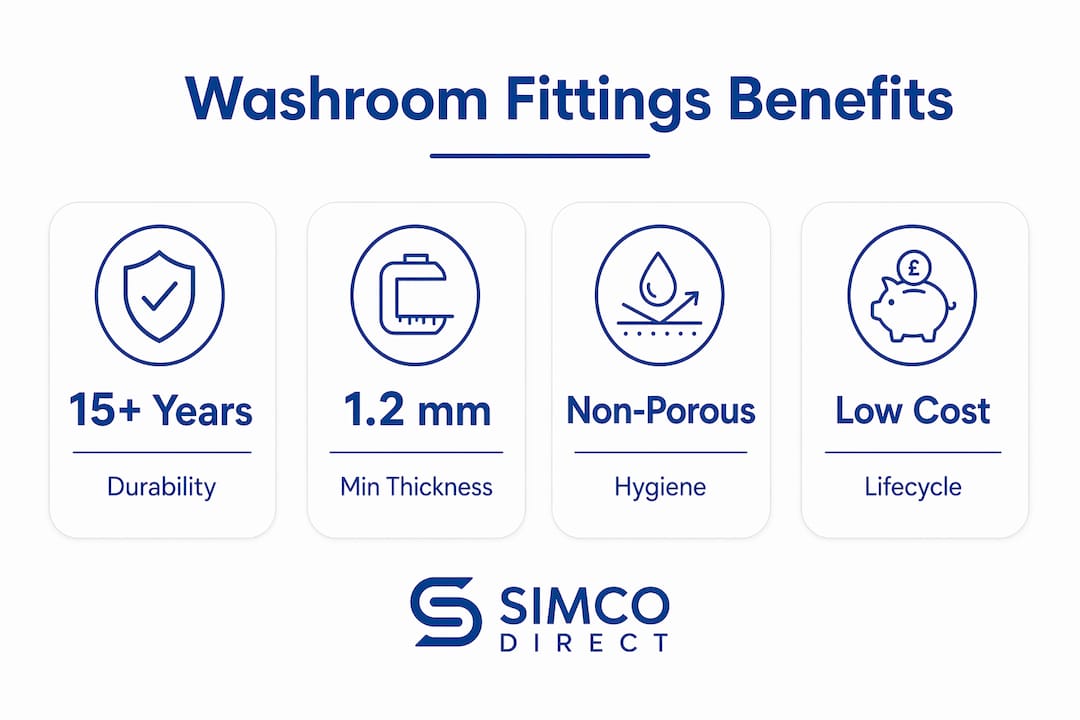
Lifespan data reinforces this choice. Quality commercial stainless steel faucets last 10–15 years, while zinc alloy alternatives require replacement within 3–7 years. Brass-based fixtures also suffer from plating that peels and flakes over time, creating both an aesthetic problem and a hygiene risk. Stainless steel has no plating to fail.
Key durability advantages over common alternative materials:
- Rust resistance: The chromium oxide layer prevents oxidation without any surface treatment.
- Impact resistance: Stainless steel withstands vandalism and physical impact far better than ceramic or plastic fittings.
- Chemical tolerance: The material resists the bleach-based cleaners used in commercial washrooms without surface degradation.
- No delamination: Unlike plated or coated alternatives, stainless steel has no surface layer to peel or chip.
Pro Tip: Specify a minimum plate thickness of 1.2mm for any commercial application. Lighter gauges dent under impact, compromising both appearance and the non-porous surface that delivers hygiene benefits.
How do stainless steel fittings support hygiene and easier maintenance?
Stainless steel’s non-porous surface is its most significant hygiene advantage. Fluids and microbes cannot penetrate the surface, which means bacteria have no reservoir in which to multiply between cleaning cycles. This property is why stainless steel sanitary ware achieves a surface roughness of Ra ≤ 0.8μm, a standard that actively prevents microbial growth. Porous materials such as unglazed ceramic or plastic composites cannot reliably meet this threshold.
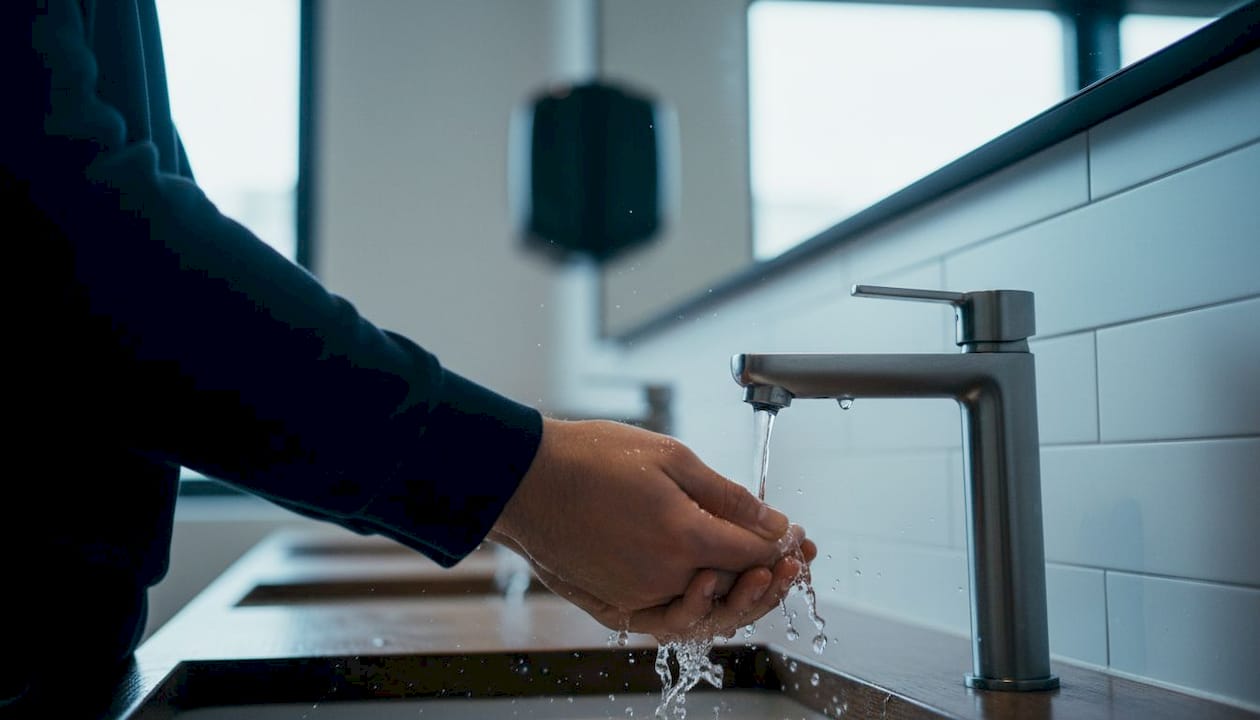
The cleaning regime for stainless steel is also simpler and less damaging to the surrounding environment. A non-porous surface reduces cleaning time, requires milder chemical concentrations, and protects adjacent substrates from the chemical damage caused by repeated application of strong disinfectants. Grout lines, sealants, and wall cladding around stainless steel fittings last longer because the fittings themselves do not require aggressive cleaning products. This is a detail that facility managers frequently overlook when comparing materials at the specification stage.
Finish choice affects maintenance workload significantly. Brushed stainless steel finishes conceal fingerprints and water marks far better than mirror finishes, reducing the cleaning labour required in busy washrooms. Mirror finishes show every mark and require more frequent attention to maintain appearance. For public-facing washrooms in offices, schools, or transport facilities, a brushed finish is the practical standard.
Maintenance benefits at a glance:
- Faster cleaning cycles: Smooth surfaces wipe clean without scrubbing.
- Milder chemicals: Lower concentrations of disinfectant achieve the same result, reducing staff exposure and material costs.
- Longer surrounding material life: Less chemical use means grout, sealant, and wall finishes last longer.
- Finish durability: Brushed finishes retain their appearance under daily cleaning without polishing.
Pro Tip: For washrooms with high footfall, pair brushed stainless steel fittings with ergonomic washroom design principles to reduce touch points and further cut cleaning time.
What are the sustainability and lifecycle cost advantages of stainless steel?
Stainless steel is infinitely recyclable without loss of material quality. Recycled content in European stainless steel averages 60–95%, making it one of the most circular materials available for construction and fit-out projects. At end of life, stainless steel fittings retain significant scrap value and re-enter the production cycle without downgrading. Plastic and ceramic alternatives generate landfill waste and carry no recovery value.
For projects targeting BREEAM credits or other environmental certifications, stainless steel’s recyclability and long service life contribute directly to materials and waste categories. Specifiers working on new commercial builds or major refurbishments increasingly treat this as a non-negotiable criterion. The material’s credentials are well-documented and accepted by certification assessors.
Facility managers who focus on total lifecycle cost rather than upfront purchase price consistently find that stainless steel delivers lower total cost of ownership through reduced repair, replacement, and maintenance expenditure over the building’s operational life.
The financial case is straightforward when modelled over a 15-year horizon:
- Fewer replacements: Stainless steel fittings outlast zinc alloy and plastic alternatives by a factor of two or more.
- Lower repair costs: The material does not crack, chip, or delaminate, eliminating the repair calls that ceramic and coated fittings generate.
- Reduced cleaning costs: Faster cleaning cycles and milder chemicals lower the labour and consumable spend per washroom per year.
- Retained asset value: Stainless steel fittings do not degrade visually or structurally in the way that plated or painted alternatives do, preserving the facility’s appearance without capital reinvestment.
Facility managers should focus on total lifecycle cost rather than line-item purchase price when writing specifications. A fitting that costs 30% more at purchase but lasts twice as long and requires half the maintenance is the lower-cost option by any rational measure. For guidance on how ceramic alternatives compare on these metrics, the ceramic bathroom accessories overview provides a useful reference point.
Which stainless steel grades are right for different washroom environments?
Grade selection is the most consequential specification decision for stainless steel washroom fittings. The wrong grade in the wrong environment causes premature pitting corrosion, which destroys the non-porous surface and negates every hygiene and durability advantage the material offers.
| Grade | Composition | Best environment | Avoid when |
|---|---|---|---|
| 304 | 18% chromium, 8% nickel | Standard commercial and residential washrooms | Coastal locations or heavy chlorine use |
| 316 | 18% chromium, 10% nickel, 2% molybdenum | Coastal sites, swimming pools, high-chlorine cleaning regimes | Budget is the only constraint |
Grade 304 is the standard for most commercial applications, including offices, schools, and retail facilities. Grade 316 adds molybdenum, which resists chloride-induced pitting. Coastal buildings, leisure centres, and any washroom where hypochlorite-based cleaners are used at high concentrations require grade 316. Specifying grade 304 in these environments causes visible corrosion within two to three years, requiring full replacement.
Thickness is the second critical variable. A minimum plate thickness of 1.2mm maintains structural integrity under impact and preserves the surface flatness that makes cleaning effective. Thinner gauges dent on contact, creating surface irregularities where bacteria can accumulate. For high-traffic zones such as airport washrooms or stadium facilities, 1.5mm or above is the preferred specification.
Finish selection completes the specification. Brushed finishes suit public washrooms for their mark-concealing properties. Mirror finishes are appropriate for lower-traffic, higher-specification environments such as hotel suites or executive facilities, where appearance is prioritised and cleaning frequency is higher. Mixing finishes within a single washroom creates visual inconsistency and complicates the cleaning regime. Coordinate all fittings to a single finish standard for both aesthetic and operational reasons. For inspiration on current design directions, modern bathroom accessory trends for 2026 shows how stainless steel integrates with contemporary washroom schemes.
What I have learned from specifying stainless steel washroom fittings
The single most common mistake I see in washroom specifications is treating stainless steel as a commodity. Developers compare price per unit across grades and thicknesses without understanding that a 0.8mm grade 304 fitting and a 1.5mm grade 316 fitting are not the same product. They will perform completely differently over a ten-year operational period, and the cheaper option will cost more in total.
The second mistake is specifying a mirror finish for a high-traffic public washroom because it looks impressive in a brochure. Within six months, that finish requires daily polishing to remain presentable. The cleaning labour cost over five years exceeds the price difference between a brushed and mirror finish by a significant margin. Brushed finishes are not a compromise. They are the correct choice for most commercial environments.
The third issue is failing to coordinate fittings with the broader material palette. Stainless steel fittings paired with porous grout or low-quality sealant create a weak point in the washroom’s hygiene performance. The fittings will outlast the surrounding materials, and the facility manager ends up with a washroom that looks tired despite having durable fittings. Specify the whole system, not just the headline components.
Lifecycle thinking is not a theoretical exercise. It is the practical framework that separates a well-specified washroom from one that generates maintenance calls and replacement budgets within five years.
— Carl
Stainless steel washroom fittings from Simcodirect
Simcodirect stocks a curated range of stainless steel washroom fittings and accessories suited to both commercial and residential projects, with grade and finish options to match any specification requirement.
From the wall-mounted Bobrick toilet brush holder built for demanding commercial environments, to the UltraDry Pro 1 brushed satin hand dryer that combines stainless steel durability with a low-maintenance finish, Simcodirect’s product selection reflects the specification standards covered in this article. Every product ships with fast UK delivery and a 30-day returns policy. Browse the full washroom accessories range at simcodirect.co.uk or contact the team for specification support on your next project.
Key takeaways
Stainless steel washroom fittings deliver lower total cost of ownership than alternative materials through superior durability, hygiene performance, and recyclability across commercial and residential applications.
| Point | Details |
|---|---|
| Grade selection is critical | Specify grade 304 for standard environments and grade 316 for coastal or high-chlorine washrooms. |
| Minimum 1.2mm thickness | Thinner gauges dent under impact and compromise the non-porous surface that delivers hygiene benefits. |
| Brushed finish for high traffic | Brushed stainless steel conceals marks better than mirror finishes, reducing cleaning labour in busy washrooms. |
| Lifecycle cost beats purchase price | Stainless steel fittings last 10–15 years versus 3–7 years for zinc alloy alternatives, lowering total spend. |
| Recyclability supports certification | Recycled content of 60–95% and infinite recyclability contribute to BREEAM and environmental certification credits. |
FAQ
Why choose stainless steel over plastic or ceramic fittings?
Stainless steel outlasts both plastic and ceramic alternatives, resists impact and chemical damage, and maintains a non-porous surface that prevents bacterial growth. Ceramic and plastic fittings crack, chip, or degrade under the cleaning regimes required in commercial washrooms.
What is the difference between grade 304 and grade 316?
Grade 304 suits most standard commercial and residential washrooms, while grade 316 adds molybdenum to resist chloride-induced pitting in coastal or high-chlorine environments. Specifying the wrong grade causes premature corrosion and early replacement.
Are stainless steel fittings worth the higher upfront cost?
Quality stainless steel fittings last 10–15 years compared to 3–7 years for zinc alloy alternatives, delivering a lower total cost of ownership when repair, replacement, and cleaning costs are included over the building’s operational life.
Which finish is best for a busy public washroom?
Brushed stainless steel is the standard choice for public washrooms because it conceals fingerprints and water marks better than mirror finishes, reducing the cleaning labour required to maintain a presentable appearance.
Does stainless steel support environmental certification targets?
Stainless steel’s recycled content of 60–95% and infinite recyclability contribute directly to BREEAM materials and waste credits, making it a preferred specification for projects with environmental certification requirements.