


Measure Threads First: 3 Tap Aerator Stream Types and the Right Fit
The main tap aerator types are aerated, laminar and spray, and each produces a completely different feel at the outlet. Before choosing between them, check whether your tap fitting is male or female threaded and measure its diameter, because getting the fit wrong makes the stream type irrelevant. The sections below cover sizing, flow rates, hidden aerators and cleaning, so you can order the correct replacement first time.
TL;DR:
- Proper measurement of thread size and gender is crucial, as mismatched aerators are the most common reason replacements fail to fit.
- High-flow aerators between 1.5 and 2.2 GPM suit kitchen taps, while lower GPM options around 1.0 to 1.5 are better for basin taps to prevent underwhelming water flow.
- Recessed or cache aerators require a removal key, and using the wrong tool or mismatched thread pitch can prevent proper installation or cause leaks.
- Cleaning mineral deposits with vinegar and checking the rubber washer can often restore flow, avoiding unnecessary replacement costs.
- Select aerator types based on use case: aerated for soft flows, laminar for visual clarity and hygiene, and spray for fuller feel with low flow, ensuring compatibility with tap fittings.
Table of Contents
- Types of tap aerator streams and what they do
- Aerator sizes, thread types and how to measure what you need
- Flow rates and the water-saving trade-off
- Hidden aerators, removal keys and when an adapter helps
- How to choose the right aerator: a quick checklist
- Installation, cleaning and basic maintenance
- Materials and special features worth knowing about
- A publisher’s perspective on getting this right
- Sources
- FAQ
Types of tap aerator streams and what they do
Every aerator changes the water in a different way, and the difference shows the moment you turn the tap on.
Aerated (standard) streams mix air into the water as it leaves the tap, producing the familiar soft, cloudy flow you get on most kitchen and bathroom taps. This is the default fitted to the vast majority of domestic taps because it cuts splashing and feels gentle on the hands, and it’s the type manufacturers reach for first when designing standard faucet aerators.
Laminar (non-aerated) flow does the opposite: it straightens the water into individual, clear streams rather than mixing in air. You’ll see this on designer basin taps and increasingly in clinical or healthcare settings, where a visually pure stream and reduced aerosol dispersion both matter.
Spray or rosette aerators push water through dozens of tiny holes, creating a fine multi-jet pattern that feels stronger than its actual flow volume suggests, useful where you want a low-flow feel without a weak, dribbling stream.
Some heads combine functions:
- Swivel aerators rotate to redirect the stream around the sink bowl.
- Dual-function heads let you switch between aerated and spray settings at will.
- Multi-stream rosettes are common on modern mixer taps for a fuller-feeling wash.
Manufacturer guides on aerator stream types note that each style suits a distinct hygiene and visual purpose rather than being purely cosmetic.
Aerator sizes, thread types and how to measure what you need
Getting the thread wrong is the single most common reason a replacement aerator won’t fit, so this is where to spend your time before ordering.
Male vs female threads. If the threads sit on the outside of the tap spout, you need a female aerator to screw over them. If the threads are recessed inside the spout, you need a male aerator to screw into them. A quick visual check at the tap outlet usually settles it.
Common nominal sizes. Field guides typically group aerators into three families: regular (roughly M22 or M24), junior (smaller, around M16 to M18), and tom-thumb or cache sizes for very small or recessed fittings, according to SANIKB’s aerator sizing guide. The Wikipedia entry on faucet aerators confirms M22×1 female and M24×1 male as the most widely used metric standards.
To identify what you actually need:
- Remove the old aerator with your fingers or a small wrench and check for threads on the inside or outside of the housing.
- Do a quick coin-size comparison against the opening to estimate diameter before you measure properly.
- Measure the insert’s outer or inner diameter with a ruler or callipers for a more precise figure.
- Note that thread pitch (the spacing between threads) can still vary between manufacturers even when the diameter matches, so a “same size” aerator sometimes won’t screw on cleanly.
Flow rates and the water-saving trade-off
Flow rate is measured in gallons per minute (GPM) or litres per minute (lpm), and it tells you how much water actually leaves the tap, independent of how the stream feels.
Kitchen taps generally work best in a higher range, roughly 1.5 to 2.2 GPM, because you need enough volume to fill a saucepan or washing-up bowl in reasonable time. Basin taps can drop to 1.0 to 1.5 GPM or lower without feeling underpowered, since hand washing and shaving need far less volume, a distinction confirmed in D and G Flooring’s buyer’s guide to aerator types.
- Lower GPM aerators reduce fill times for baths, buckets or large pans, which is worth weighing before fitting one on a kitchen mixer.
- Aeration itself can mask a flow reduction, since mixing in air makes a smaller water volume feel fuller and more forceful.
- Dedicated low-flow aerators exist specifically for water-saving retrofits, separate from the standard aerators taps ship with.
Statistic check: aerators and flow regulators are marketed specifically as water-saving fittings because restricting outlet flow directly cuts hot-water energy use, according to PlumbingSupply’s guide to faucet aerators. Swapping a worn kitchen aerator for a rated low-flow version is one of the cheapest efficiency upgrades in the house.
Hidden aerators, removal keys and when an adapter helps
Recessed or “cache” aerators sit flush inside the spout with no visible edge to grip, which is why so many people assume theirs is faulty rather than simply hidden.
- Look for a small slot or notch inside the spout opening; that’s usually where a removal key engages.
- Use the correct key gently, since forcing a generic tool against a recessed thread risks stripping it.
- Consider an adapter only once you know both thread types precisely; mismatched pitch is the most common reason an adapter fails to seal properly.
- If the tap uses an integrated or proprietary cartridge system, check the manufacturer’s documentation or speak to a plumber rather than guessing.
How to choose the right aerator: a quick checklist
Run through this before you place an order, not after the wrong part arrives.
- Thread gender: male or female, checked visually at the outlet.
- Diameter: measured directly, not estimated by eye.
- Exposed or recessed: determines whether you need a removal key.
- Flow target: higher GPM for kitchens, lower for basins.
- Stream preference: aerated, laminar or spray, depending on feel and hygiene needs.
- Washer included: a missing or perished washer is a common cause of leaks after fitting.
- Pitch compatibility: confirm it matches your tap’s specific make, not just the nominal size.
- Finish match: chrome, brushed steel or matte black housings should match the visible tap body.
Pro Tip: Photograph the old aerator next to a coin before you remove it. It gives you a size reference if the new part doesn’t screw on first time and you need to check measurements again.
Red flags worth pausing on: a thread that “almost” fits but won’t turn smoothly, a bespoke integrated spout system with no standard thread at all, or visibly damaged threads on the tap itself, any of which point to a professional check rather than a DIY fix.
Installation, cleaning and basic maintenance
Weak or splashy flow is usually mineral scale, not a failing tap, and it’s worth checking before buying anything new.
- Unscrew the aerator by hand or with a wrapped cloth and pliers if it’s stuck.
- Rinse off loose debris, then soak the insert in white vinegar to dissolve limescale.
- Brush the mesh gently with an old toothbrush to clear remaining deposits.
- Check the rubber washer for cracking or flattening and replace it if it’s no longer pliable.
- Reinstall by hand-tightening only; over-tightening with a wrench can crack plastic housings or distort the seal.
Utility guidance from Cleveland Water’s aerator cleaning instructions suggests a vinegar soak and brushing will restore flow in a matter of minutes for most household clogs. If flow stays weak after cleaning, or the housing itself is cracked, replacing the aerator is cheaper and less frustrating than repeating the soak.
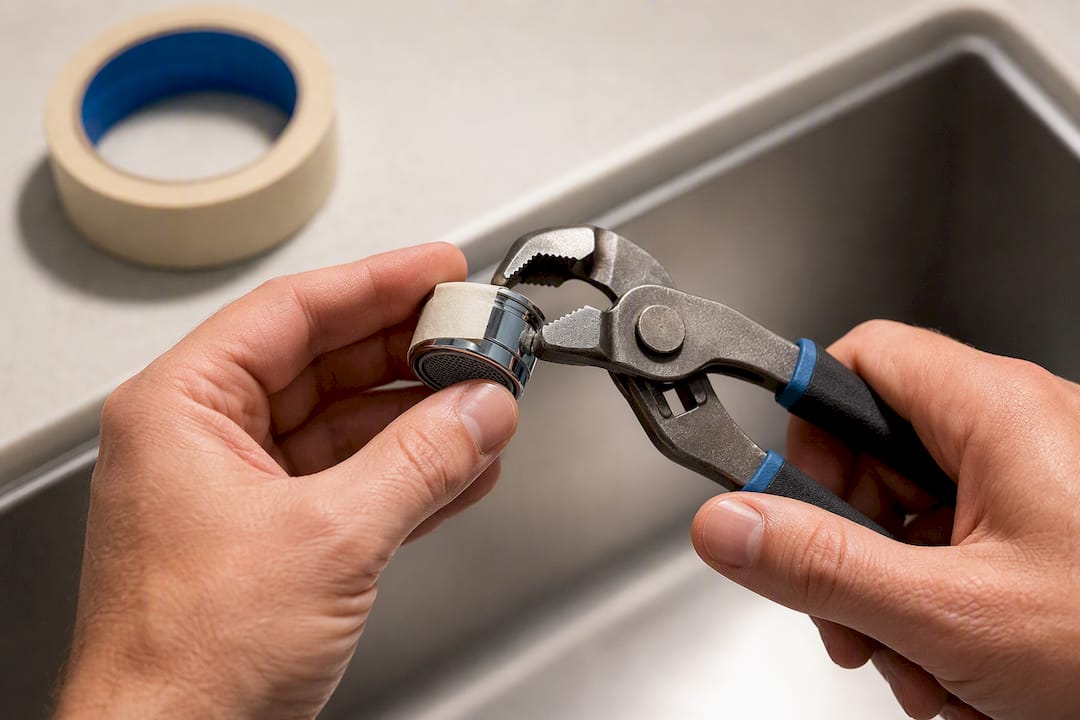
Pro Tip: Wrap the tap’s chrome collar in tape before using pliers on a stuck aerator. It stops the jaws scratching the finish.
Materials and special features worth knowing about
Metal aerator housings (usually brass with a chrome or nickel finish) last longer and resist cracking better than plastic equivalents, though plastic is lighter and cheaper for low-visibility fittings.
- Anti-vandal or fine-screen inserts are built for public washrooms but suit any household wanting extra tamper resistance.
- Swivel heads help direct water around a bowl without repositioning the whole tap.
- Dual-flow or pause functions suit taps used for both filling and quick rinsing.
- Speciality inserts, including diverter outlets for filtered water, exist for specific plumbing setups, as outlined in INOXBATH’s guide to aerator types and functions.
Match the visible housing finish to the tap body itself; a mismatched chrome aerator on a brushed steel tap is a small detail that stands out every time you use the sink. If you’re weighing up a full tap swap rather than just the aerator, Simcodirect’s bathroom taps buying guide covers finish and flow style in more depth.
A publisher’s perspective on getting this right
Most aerator problems trace back to skipping the measuring step, not to a bad product. Simcodirect’s help resources and product pages are worth checking against your tap’s documentation before ordering. Confirm the washer, thread pitch and the retailer’s returns policy first; it saves a second delivery.
— Carl
Sources
For deeper technical detail, Neoperl’s stream-type guide explains manufacturer rationale, while Cleveland Water’s cleaning PDF gives step-by-step maintenance instructions.
- How to clean an aerator (utility guidance)
- Faucet Aerator Guide: Sizes, GPM & Cleaning | SANIKB
- Faucet aerator
- Faucet aerators – small parts, large effect
FAQ
How do I know what size tap aerator I need?
Remove the existing aerator and measure its diameter directly rather than guessing from the tap’s overall size. Common nominal sizes include regular (around M22 or M24), junior (M16 to M18), and tom-thumb for recessed fittings, though thread pitch can still vary between manufacturers at the same nominal size.
How do I know what kind of aerator I need?
Match the aerator to how you use the tap: aerated for general kitchen and bathroom use, laminar for a clear, low-splash stream, or spray/rosette where you want a fuller feel at lower flow. Check whether your tap needs a male or female thread before choosing a stream type.
What are the different types of water aerators?
The three core stream types are aerated (mixes air for a soft flow), laminar or non-aerated (straightens water into clear jets), and spray or needle (many fine streams from a rosette pattern), as distinguished in Neoperl’s manufacturer guidance. Some heads add swivel or dual-flow functions on top of these base types.
What are the different types of aerators?
Beyond the three stream types, aerators also vary by fitting: exposed male or female threaded inserts, and recessed cache aerators that need a removal key. Speciality versions include anti-vandal and fine-screen inserts for public or filtered-water use, covered in INOXBATH’s aerator guide.