


UK Bathroom Renovation Planning Guide for Homeowners
A UK bathroom renovation planning guide gives you a clear roadmap to design, budget, and manage your project from start to finish. The industry term for this process is “bathroom project management,” and it covers everything from scope definition to trade coordination. A full bathroom renovation in the UK typically costs between £3,500 and £10,000, with mid-range projects landing between £6,000 and £8,000. UK Building Regulations Part F sets minimum ventilation standards your design must meet. Getting these fundamentals right before you lift a single tile saves you money, time, and serious stress.
What does a UK bathroom renovation planning guide actually cover?
A bathroom renovation planning guide covers four core areas: budgeting, layout, scheduling, and trade coordination. Miss any one of them and you will pay for it later, either in cost overruns, delays, or rework. The guide to bathroom redesign in the UK differs from other countries because of specific Building Regulations, older housing stock with unpredictable pipework, and the wet climate that makes ventilation non-negotiable.

The most common mistake homeowners make is treating a bathroom renovation as a shopping exercise. You pick tiles, pick a bath, and assume the rest falls into place. It does not. Successful projects start with a written scope, a realistic budget, and a sequenced plan before any products are ordered.
How to set your bathroom renovation budget
Budget setting is the single most important step in planning a bathroom remodel in the UK. Without a clear financial ceiling, scope creep will push your project well past what you intended to spend.
UK renovation costs break down into three broad tiers:
- Budget/basic: £3,000–£4,500. Covers a straightforward swap of fixtures with minimal layout changes and standard tiles.
- Mid-range: £6,000–£8,000. Includes quality sanitaryware, bespoke tiling, and some layout adjustments.
- Premium/bespoke: £10,000 and above. Covers full redesigns, high-end materials, underfloor heating, and custom storage.
These figures cover labor and materials but can shift significantly based on your location in the UK, the condition of your existing bathroom, and the trades you hire.
Hidden costs are common; setting aside a 15–20% contingency fund is strongly advised. On a £7,500 project, that means keeping £1,125–£1,500 in reserve for surprises like rotten joists or corroded pipework discovered after strip-out. That money rarely goes unspent.
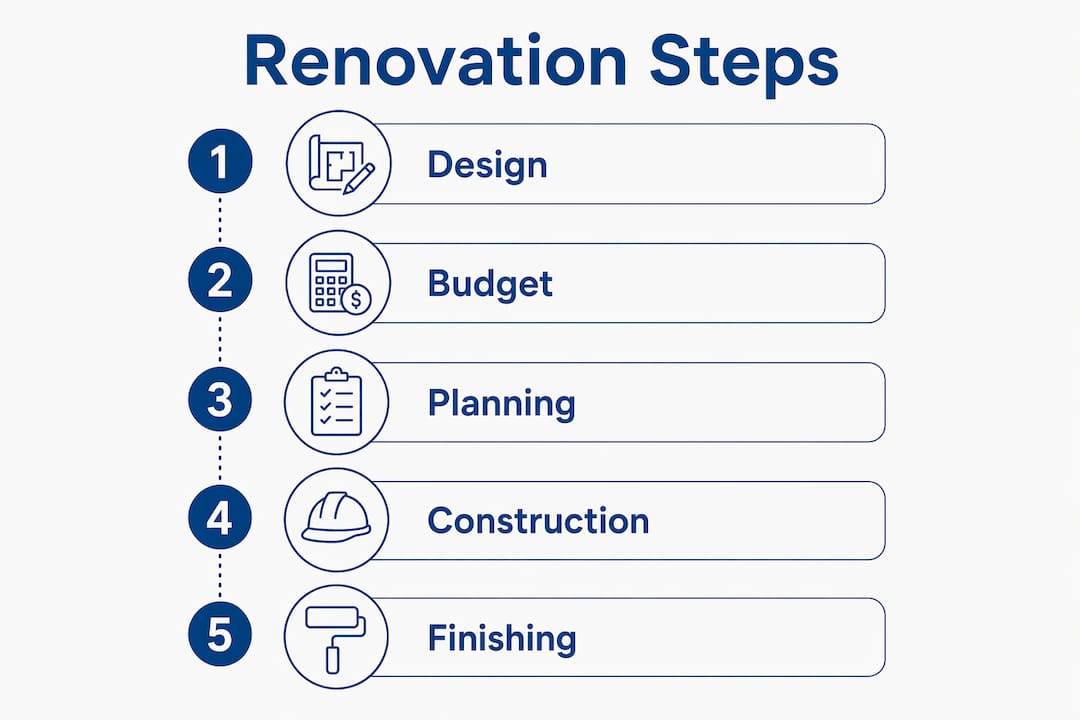
The scope decision matters as much as the budget. A full remodel replaces everything including the bath, shower, toilet, basin, tiles, and flooring. A minor refresh swaps fixtures and updates surfaces. A style upgrade changes finishes and accessories without touching plumbing. Each tier carries a different cost and timeline profile.
Pro Tip: Always get a fixed-price quote that explicitly includes waste removal, tiling, and installation. Quotes that exclude these items routinely come in 20–30% higher once work begins.
How should you plan your bathroom layout and design?
Smart layout planning is where you control costs before construction starts. Relocating plumbing fixtures is the largest single cost driver in any bathroom renovation. Keeping your toilet, basin, and bath or shower roughly where they are saves several hundred pounds in labor alone.
Ventilation requirements under UK Building Regulations
UK Building Regulations Part F requires a minimum extraction rate of 15 liters per second in bathrooms without an opening window. This is not optional. Skipping compliant ventilation leads to condensation, mold, and potential issues if you ever sell your home. If your layout removes the only window, a mechanical extractor fan rated to Part F is mandatory.
Surface finishes and storage for small bathrooms
Tiles remain the most durable surface choice for wet zones, but moisture-tolerant wall panels and specialist bathroom paint are valid options for lower-budget projects. Wall-hung vanities free up floor space and make cleaning easier. Mirrored cabinets above the basin double as storage and visually expand a small room. Both are worth prioritizing in any UK bathroom design.
Lighting deserves more attention than most homeowners give it. A single ceiling light creates flat, unflattering illumination. Layer your lighting with a main ceiling fitting, task lighting around the mirror, and a night light or dimmer for ambiance.
Layout do’s and don’ts to keep in mind:
- Do keep the toilet against an external or stack wall to minimize waste pipe runs.
- Do position the shower or bath near existing hot and cold supply lines.
- Do allow at least 700mm of clear floor space in front of the toilet and basin.
- Don’t place a shower directly opposite a door without a proper screen or enclosure.
- Don’t tile over unprimed or damp plaster. It will fail.
- Don’t ignore the position of your extractor fan relative to the moisture source.
Pro Tip: Engaging specialist retailers or contractors early in the design phase confirms that your chosen products are technically compatible with your plumbing and space before you commit to purchasing them.
What is a realistic timeline for a UK bathroom renovation?
Homeowners consistently underestimate total renovation timelines. The physical work on site takes 3–4 weeks, but the full project from design to handover runs 10–12 weeks. That gap is where most projects stall.
| Phase | Duration | Key dependencies |
|---|---|---|
| Design and planning | 2–3 weeks | Scope sign-off, measurements, product selection |
| Materials ordering | 2–4 weeks | Lead times for sanitaryware, tiles, and bespoke items |
| Strip-out and first fix | 3–5 days | Plumber and electrician availability |
| Plastering | 2–3 days | Follows first fix; requires 7–14 days drying time |
| Tiling | 3–5 days | Plaster must be fully dry before tiling begins |
| Second fix and fitting | 3–5 days | Sanitaryware, electrics, accessories |
| Decoration and finishing | 2–3 days | Paint, sealant, final checks |
The drying time between plastering and tiling is the phase most homeowners try to rush. New plaster must dry for 7–14 days and reach below 0.5% moisture content before tiling. Tiling too early causes adhesive failure and mold behind the tiles, which means ripping everything out and starting again.
Build buffer days between each trade into your schedule. Tradespeople have other jobs. A plumber who finishes first fix on a Friday may not be available for second fix until the following Wednesday. That gap is normal. Plan for it rather than being caught off guard by it.
How do you coordinate trades and avoid common renovation pitfalls?
Trade sequencing in bathroom renovations follows a fixed order: strip-out, first fix plumbing and electrics, plastering, tiling, second fix installation, then painting and finishing. Disrupting this sequence creates rework and cost. A tiler who arrives before the plasterer has finished is a tiler you are paying to wait.
Waterproofing: the step most projects get wrong
Poor waterproofing is the leading cause of renovation failure. The fix is straightforward but requires patience. Use a moisture meter to verify plaster is below 0.5% moisture before tiling. Apply a tanking membrane or waterproofing slurry in wet zones like shower enclosures and around the bath. These steps add a day to your timeline and a small cost to your budget. Skipping them adds weeks of remedial work and potentially thousands in damage.
Common pitfalls and how to prevent them:
- Rotten joists or subfloor: Budget your 15–20% contingency before strip-out, not after.
- Old or undersized pipework: Ask your plumber to inspect supply and waste pipes during the design phase, not on day one of construction.
- Incompatible products: Confirm that your chosen shower valve, bath filler, and basin tap all work with your water pressure before ordering.
- Delayed tile delivery: Order tiles at least four weeks before the tiling phase. Discontinued batches cause mismatched repairs later.
- Electrical zones: Bathrooms have four defined electrical zones under BS 7671. Any socket or light fitting must be rated for its zone. Your electrician must sign off on compliance.
Pro Tip: Book your plasterer and tiler in sequence before construction starts. Tradespeople with a confirmed schedule are far less likely to leave gaps in your project timeline.
Key Takeaways
A successful UK bathroom renovation depends on locking in your budget, layout, and trade schedule before any work begins, not after.
| Point | Details |
|---|---|
| Set a realistic budget | UK renovations run £3,500–£10,000; always hold a 15–20% contingency for hidden costs. |
| Minimize plumbing changes | Keeping fixtures near existing supply lines is the most effective way to control labor costs. |
| Meet Part F ventilation rules | Bathrooms without opening windows require a mechanical extractor rated at 15 liters per second minimum. |
| Plan for 10–12 weeks total | Physical work takes 3–4 weeks, but design, ordering, and drying time add 6–8 weeks to the full timeline. |
| Sequence trades correctly | Strip-out, first fix, plastering, tiling, second fix, and finishing must follow this order without shortcuts. |
What I’ve learned from watching bathroom renovations go wrong
The projects that go smoothly share one trait: the homeowner made all the big decisions before the first trade arrived on site. The projects that spiral into stress and overspending share a different trait: decisions were made under pressure, mid-construction, with a plasterer waiting in the hall.
The detail most homeowners overlook is ventilation. Everyone focuses on tiles and sanitaryware. Nobody wants to talk about extractor fans. But a bathroom that does not meet UK Building Regulations Part F will grow mold within two years, regardless of how beautiful the tiles are. Ventilation is not a finishing touch. It is a structural decision that belongs in week one of planning.
Contingency budgets also get treated as optional. They are not. Every bathroom renovation I have observed that involved strip-out on a pre-1980s UK property revealed something unexpected. Rotten joists, lead waste pipes, undersized supply lines. The homeowners who had set aside 15–20% absorbed these surprises without panic. The ones who had not faced genuine financial stress mid-project.
My honest advice: spend more time on the planning phase than feels necessary. Two extra weeks of design work and trade scheduling at the start will save you four weeks of delays and rework at the end. The bathroom renovation checklist approach works because it forces you to answer hard questions before they become expensive problems.
— Carl
Finishing your renovation with the right accessories
A well-planned bathroom deserves fixtures that match its quality. Once the tiling and second fix are complete, the accessories you choose define the finished look and daily function of the space.

Simcodirect stocks a broad range of bathroom and washroom accessories built for UK homes, including the MediQo toilet brush holder in white and the Qbic hand towel dispenser for a clean, modern finish. Every product ships fast with a 30-day returns policy, so you can order with confidence during the final fit-out phase. Browse the full range at Simcodirect to find accessories that complement your new bathroom without compromising on quality or compatibility.
FAQ
How much does a bathroom renovation cost in the UK?
A standard UK bathroom renovation costs between £3,500 and £10,000, with mid-range projects typically running £6,000–£8,000. Always add a 15–20% contingency for unexpected issues uncovered during strip-out.
Do I need planning permission for a bathroom renovation in the UK?
Most bathroom renovations fall under permitted development and do not require planning permission. You will need to comply with UK Building Regulations, particularly Part F for ventilation and Part P for electrical work.
How long does a bathroom renovation take in the UK?
The full project runs 10–12 weeks from design to completion. On-site construction takes 3–4 weeks, but design, material ordering, and drying times account for the remaining time.
What is the biggest cost driver in a bathroom renovation?
Relocating plumbing fixtures is the largest single cost driver. Keeping your toilet, basin, and bath near existing supply lines can save several hundred pounds in labor costs.
What ventilation does a UK bathroom legally require?
UK Building Regulations Part F requires a minimum extraction rate of 15 liters per second in bathrooms without an opening window. A compliant mechanical extractor fan is mandatory in these spaces.