


Vent a Portable AC: 5 Step Window Kit Install for UK Renters
Yes, a portable air conditioner must expel its exhaust outside to cool a room properly. Without a route to the outdoors, the unit just recycles heat back into the space and fights a losing battle. The simplest fix for most homes is a window vent kit, which most renters can fit and remove without damage. If a window isn’t an option, alternatives exist, though several need a landlord’s sign-off or professional help.
TL;DR:
- Portable air conditioners must vent outside through windows, walls, or other openings to effectively cool a room and prevent strain on the compressor.
- Using the shortest, straight exhaust hose with minimal bends and extensions improves performance and prolongs the unit’s lifespan.
- When venting through windows, sealing gaps with foam tape or weatherstrip ensures no warm air re-enters the space, maintaining cooling efficiency.
- Structurally altering walls or installing permanent vents requires written landlord approval, and temporary window kits are the safest for renters.
- Regularly cleaning filters, checking the condensate tank, and avoiding excessive hose length are key to troubleshooting and maintaining optimal operation.
Table of Contents
- What to check before you start venting your portable AC
- Why does a portable AC need to vent outside?
- What are the venting options for a portable AC?
- How do you fit and seal a window vent kit?
- What should renters check before venting a portable AC?
- How do you maintain and troubleshoot a vented portable AC?
- Why trust this venting guidance?
- What’s the safest way to vent a portable AC?
- Get the right accessories for a properly vented setup
- Sources
What to check before you start venting your portable AC
Before you touch a screwdriver, spend ten minutes confirming what you’re actually working with. Most portable AC problems trace back to a mismatch between the unit and the room, not a faulty machine.
- Check your manual to confirm the unit needs external venting rather than running in fan or dehumidifier-only mode.
- Measure the exhaust hose diameter and length, then measure your window or door opening against it.
- Decide early whether you need a removable setup (renting) or can commit to something permanent (owning).
- Gather sealing materials: foam strips, weatherstrip tape, or a sheet of plexiglass if your kit doesn’t include a panel.
Casement and sash windows in older UK properties rarely match the standard sliding-window kits sold with most units, so it’s worth measuring the opening shape as well as the size.
Why does a portable AC need to vent outside?
A portable AC doesn’t remove heat by magic. It pulls warm air from the room, extracts the heat using a refrigerant cycle, and needs somewhere to dump that heat. The exhaust hose is that route. Cut it off or point it into the wrong space, and the heat simply returns to where it started.
Manufacturers and independent guides agree that a portable unit run without external venting will fail to cool the room and can strain the compressor over time, since it works harder for less result. Unvented operation also pushes up humidity, and condensate systems on many models aren’t built to cope with the extra moisture load, which can lead to leaks or automatic shutdowns, according to Ideal Home.
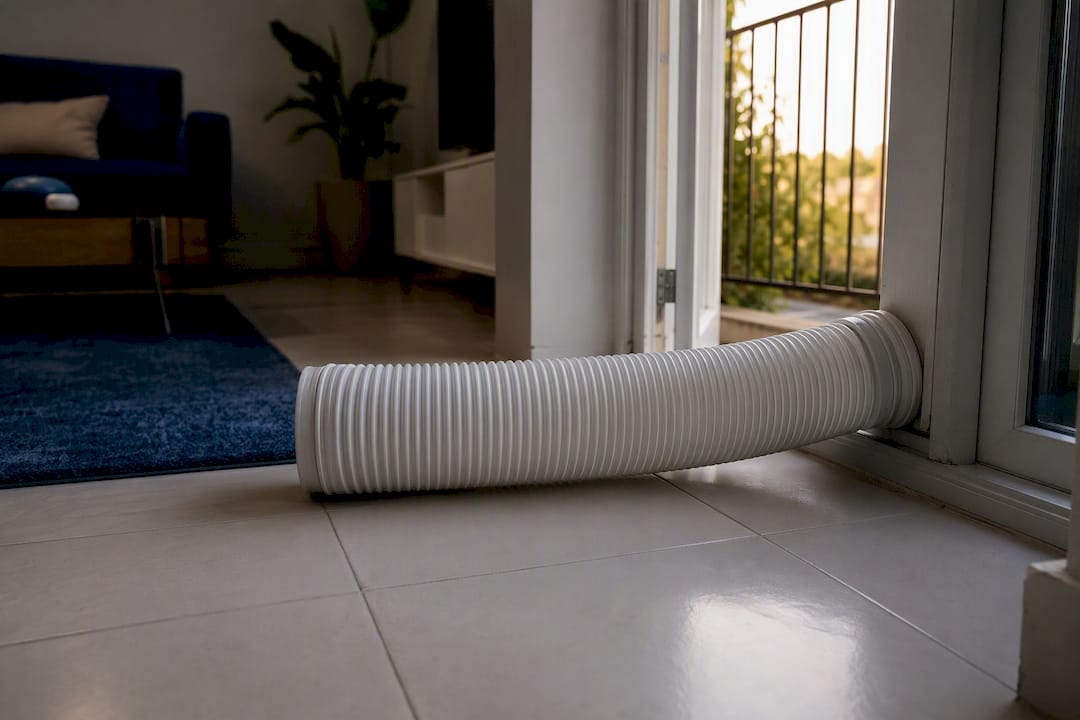
Hose routing matters just as much as venting itself. Every extra bend or metre of hose adds back pressure, and EcoAir notes this forces the compressor to work harder and shortens the system’s working life. Keep the run short and as straight as you can manage.
What are the venting options for a portable AC?
A window kit is the default for good reason: it’s cheap, quick, and reversible. But it isn’t the only route, and knowing the alternatives means you’re not stuck if your flat has no opening window near the unit.
- Window kit. Works with most sliding sash windows out of the box. Casement windows usually need a custom acrylic panel cut to fit and sealed with foam tape, which Fords recommends over trying to force a standard sliding-window bracket into an awkward gap.
- Sliding-door vertical insert. A taller version of the window panel, designed for patio doors. Costs slightly more than a basic window kit but suits ground-floor flats and houses well.
- Dryer vent or existing wall vent. Can work if the ducting genuinely runs outside, but never share a live dryer vent, and check the duct isn’t tied into an internal plenum that goes nowhere.
- Through-wall venting. The most permanent and efficient option, but it means cutting a hole in an external wall. The Spruce is blunt about this one: get a professional in, and don’t attempt it as a rental without written consent.
- Ceiling plenum venting. More common in commercial fit-outs than homes. Only viable if the plenum space genuinely vents outside, not into another internal void.
- Pet door or small exterior opening. A workable stopgap if it leads straight outside, though sealing it well enough to stop droughts and pests takes some care.
Whatever you choose, venting into another room instead of outside is never a real fix. UK Air Quality points out that this just moves the heat and humidity problem somewhere else in the house rather than removing it.
How do you fit and seal a window vent kit?
- Measure the hose diameter and your window opening, then choose a panel or kit sized to match, adding a plexiglass cut if you have a casement window.
- Fit the bracket or panel into the window frame, close the sash against it, and lock the hose adaptor into place.
- Seal every gap around the panel with foam strip or weatherstrip tape. Even small gaps let warm air back in and defeat the point of venting.
- Route the hose so it runs as directly as possible from the unit to the window, avoiding kinks, loops, or excess slack that sags under its own weight.
- Support the hose where it might dip, using a stand or hook if needed, so its own weight doesn’t pull the seal loose over time.
Pro Tip: Keep a spare length of foam tape on hand and check the seal every few days during heavy use. Warm, humid conditions make cheap foam strips shrink or peel faster than you’d expect.
Renters removing a kit at the end of a tenancy should peel off tape residue gently, wipe down the frame, and photograph the window before and after as proof of condition.
What should renters check before venting a portable AC?
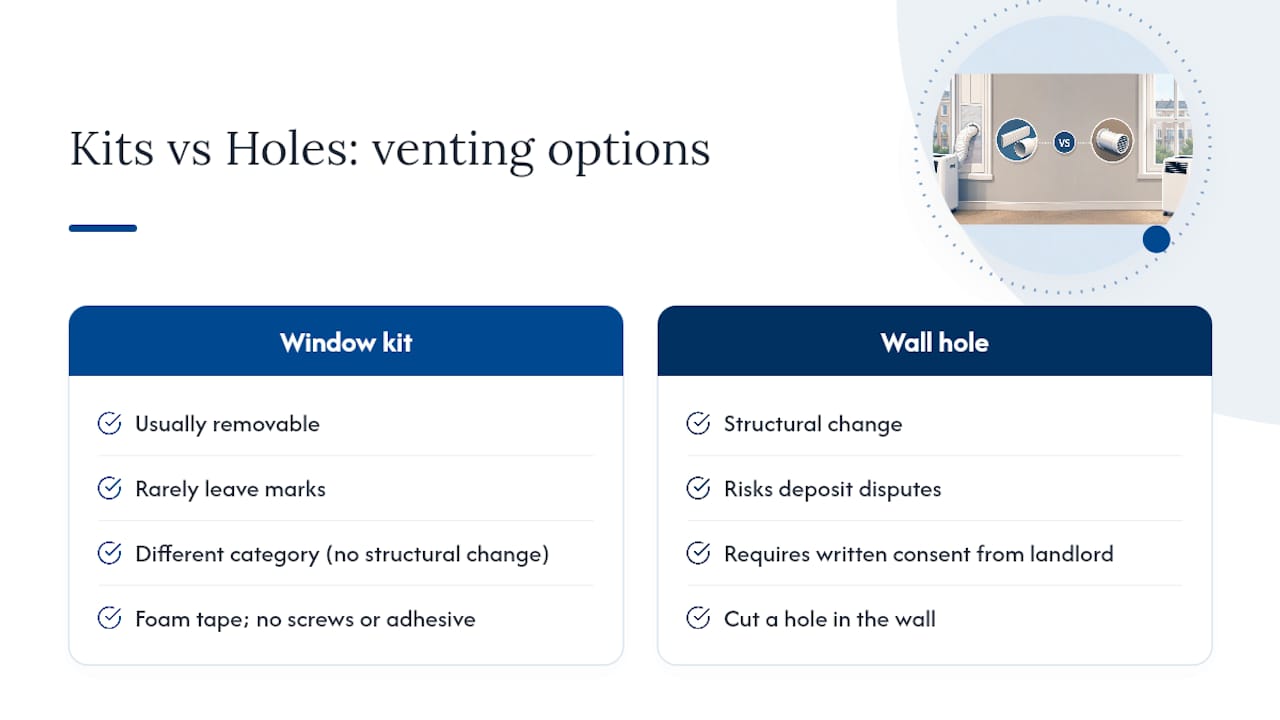
Cutting a hole in a wall is a structural change, full stop, and it needs written consent from your landlord before you start, not a verbal nod. UK Air Quality is clear that skipping this step risks disputes over your deposit later.
Window and sliding-door kits sit in a different category. Fitted carefully with foam tape rather than screws or adhesive, they’re removable and rarely leave marks. Take photos of the window before installing anything, keep receipts for any materials you buy, and remove seals cleanly when you move out. If in doubt about what counts as a reversible change under your tenancy, our guide on planning permission for air conditioning covers where the line usually falls.
How do you maintain and troubleshoot a vented portable AC?
Most performance complaints trace back to three things: a hose that’s too long, a filter that’s clogged, or a condensate tank nobody’s checked in weeks.
- Keep the exhaust hose as short and straight as the room allows. Extra bends and extensions increase back-pressure and reduce cooling output, a point EcoAir makes explicitly about hose length and system strain.
- Check your condensate tray or tank regularly. Some units self-evaporate moisture through the hose, but most still need occasional manual emptying, especially in humid weather.
- Clean or rinse the air filter every couple of weeks during regular use. A blocked filter forces the compressor to work harder and can trigger short cycling.
- Watch for signs of trouble: a burning smell, repeated shutdowns, or water pooling under the unit all suggest it’s time to call a technician rather than keep running it.
Persistent short cycling or unexplained shutdowns often point to airflow restriction rather than a fault with the compressor itself, a pattern echoed in wider commercial cooling diagnostics from Target Air Systems.
Why trust this venting guidance?
Simcodirect stocks air conditioning units and washroom ventilation products, and this guide draws on manufacturer documentation and independent UK sources rather than guesswork. For further reading, our comparison of dual hose versus single hose ACs and our best portable air conditioners roundup cover unit choice in more depth. Every order ships with fast UK delivery and a 30 day returns policy.
What’s the safest way to vent a portable AC?
Start with a window kit. If there’s no usable window, try a sliding-door insert before you consider anything structural. Through-wall venting only makes sense with written permission and a qualified installer. Keep the hose short, the filter clean, and document any temporary setup properly.
— Carl
Get the right accessories for a properly vented setup
Fitting a portable AC well often comes down to having the right sealing kit and a unit that suits your room in the first place, not just the biggest model you can find. Simcodirect stocks air conditioning units alongside washroom ventilation and heating accessories, so if you’re weighing up a replacement unit or need advice on which hose configuration suits a tricky window, our team can point you to something that fits properly the first time.
If you’re upgrading your setup this year, browse the current range of portable air conditioners or get in touch with customer service to check compatibility before you buy. Every order comes with fast UK delivery and a 30 day returns window, so there’s no risk in getting a second opinion before you commit.
Sources
- Do you have to vent a portable air conditioner outside? — Ideal Home
- How to vent a portable AC without a window — The Spruce
- What is the maximum length I can use for the air conditioning exhaust hose? — EcoAir
- How to vent a portable air conditioner without a window (UK) — UK Air Quality