


Commercial washroom accessories checklist: UK guide 2026
Every commercial washroom needs the same core kit to meet HSE Workplace (Health, Safety and Welfare) Regulations 1992 and keep users satisfied. Here is the checklist at a glance, followed by the detail you need to specify each item correctly.
Core accessory categories:
- Toilet roll holders and toilet brushes
- Soap dispensers and hand sanitiser units
- Paper towel dispensers and hand dryers
- Waste bins and sanitary disposal bins
- Coat hooks and door signs
- Recessed units and behind-the-mirror storage
- Accessibility accessories (grab bars, accessible dispensers)
- Hygiene enhancers (air fresheners, antibacterial mats)
- Maintenance and cleaning supplies
The HSE welfare guidance is clear: facilities must be clean, well lit, ventilated, and stocked with soap, toilet paper, and a means of drying hands. Public washrooms are a last resort, not a substitute for on-site provision. Durability and whole-of-life costs matter as much as the purchase price, particularly in high-traffic environments where cheap fittings fail within months.
Table of Contents
- 1. Toilet roll holders and toilet brushes
- 2. Soap dispensers and hand sanitiser units
- 3. Paper towel dispensers and hand dryers
- 4. Waste bins and sanitary disposal bins
- 5. Coat hooks and door signs
- 6. Recessed units and behind-the-mirror storage
- 7. Accessibility accessories and hygiene enhancers
- 8. Compliance and maintenance best practices
- Key takeaways
- Simcodirect stocks everything on this checklist
1. Toilet roll holders and toilet brushes
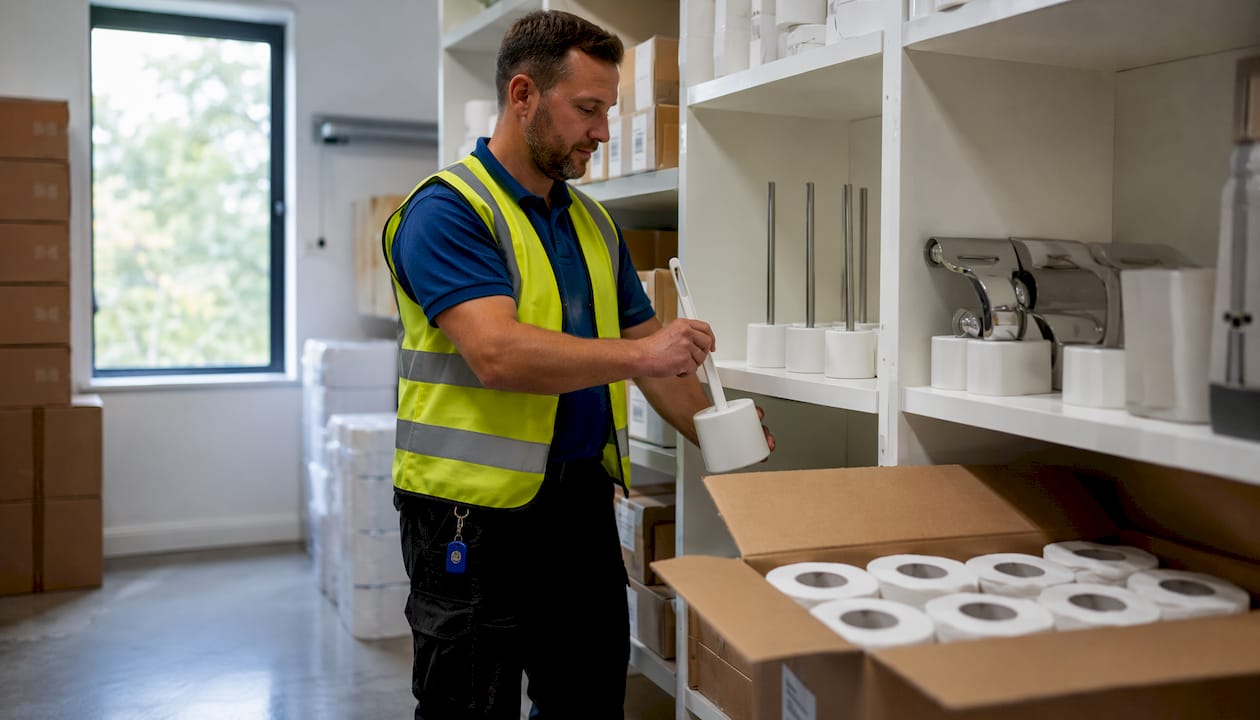
Toilet roll holders take more punishment than almost any other washroom fitting. In a busy office or public facility, a flimsy plastic holder gets ripped from the wall within weeks.
What to specify:
- Stainless steel or heavy-gauge ABS holders for durability in high-traffic settings
- Lockable or anti-theft designs to prevent roll removal and reduce waste
- Double-roll holders where footfall is high, cutting restocking frequency
- Toilet brushes with enclosed holders to contain bacteria and prevent cross-contamination
- Wall-mounted brush holders rather than floor-standing units, which are harder to clean around
Toilet brushes are often overlooked on bulk bathroom supplies checklists, yet they are a legal necessity for maintaining the clean and orderly condition required under the Regulations. Choose holders with a drip tray and a tight-fitting lid.
2. Soap dispensers and hand sanitiser units
Hand hygiene is the single biggest factor in preventing cross-contamination in commercial washrooms. The HSE requires an adequate supply of soap or other washing agents at every washbasin.
Selection criteria:
- Automatic (touchless) dispensers reduce surface contact and are the preferred choice for high-traffic office buildings
- Manual push dispensers cost less upfront but require more frequent cleaning of the actuator
- Cartridge-based systems simplify refilling and reduce spillage compared with bulk-fill bottles
- Wall-mounted placement at every basin, at a height accessible to wheelchair users
- Hand sanitiser units positioned at the washroom entrance as a supplementary measure, not a replacement for soap and water
Cartridge dispensers also make it easier to track consumption, which matters when you are managing a washroom equipment inspection checklist across multiple sites. Pair soap dispensers with workplace hygiene practices guidance displayed near basins to reinforce correct handwashing technique.
3. Paper towel dispensers and hand dryers
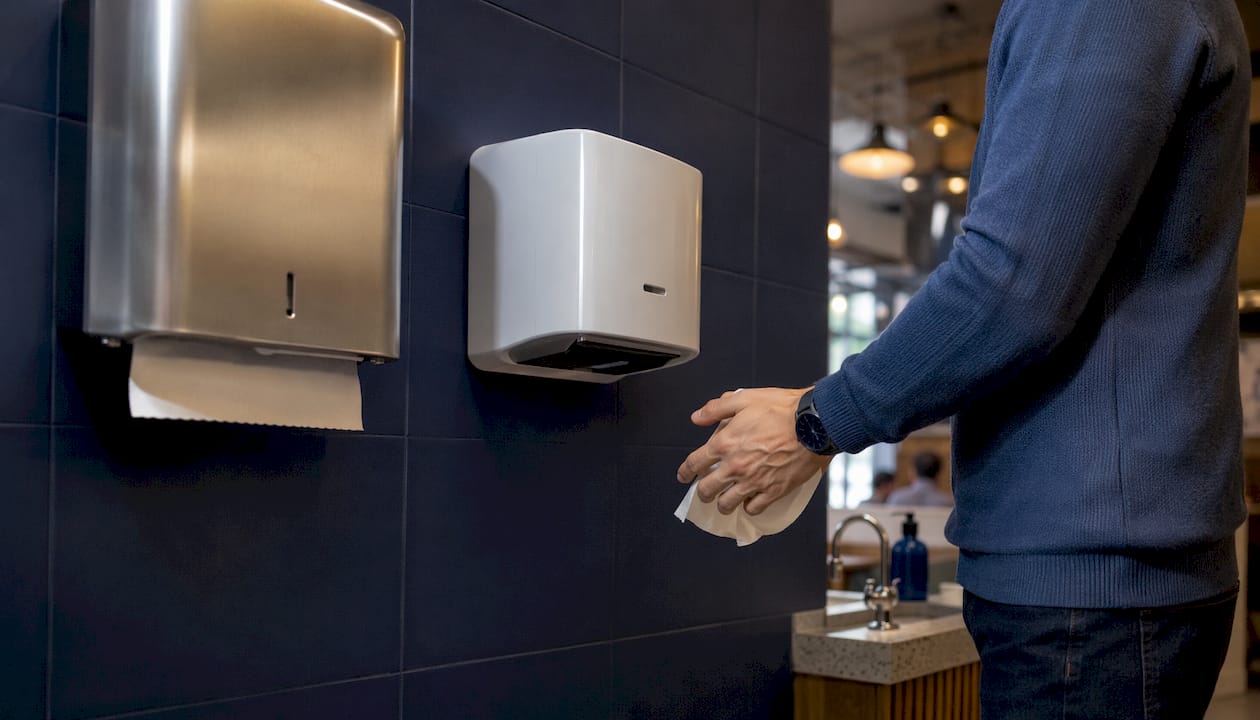
Drying hands properly is as important as washing them. Open countertop baskets for paper towels are unhygienic: wet hands dripping onto loose towels create ideal conditions for bacterial growth. Wall-mounted, enclosed dispensers that deliver one towel at a time are the standard for health compliance.
Dispenser types:
- Wall-mounted enclosed dispensers for single-fold or Z-fold towels
- Recessed dispensers where wall depth allows, keeping surfaces clear
- High-capacity units to reduce restocking frequency during peak hours
Hand dryers suit facilities where paper waste is a concern or where restocking is difficult. Two models worth considering for commercial use are the Biodrier Executive Hand Dryer and the UltraDry Pro 1 Hand Dryer Brushed Satin. Both are designed for busy environments, with energy-efficient motors and hygienic HEPA-filtered airflow. For a full breakdown of models and placement advice, the hand dryer guide for commercial washrooms covers the 2026 options in detail.
Pro Tip: In high-traffic washrooms, fit both a paper towel dispenser and a hand dryer. Some users will always prefer one over the other, and offering both reduces queuing at peak times.
4. Waste bins and sanitary disposal bins
Every commercial washroom needs at least one general waste bin per cubicle and one at the handwashing station. Sanitary bins are a legal requirement wherever female employees or visitors use the facility.
Key considerations:
- Pedal-operated or sensor lids on general bins to avoid hand contact
- Stainless steel or powder-coated steel for durability and ease of cleaning
- Discrete, lidded sanitary bins in every female or mixed-use cubicle, sized appropriately for footfall
- Contracted sanitary bin servicing to meet hygiene regulations and remove the burden from in-house cleaning staff
- Colour-coded liners to simplify waste segregation where required
Sanitary bins must be emptied and sanitised regularly. Leaving this to chance is one of the most common failures on a washroom equipment replacement checklist. A contracted service removes the compliance risk entirely.
5. Coat hooks and door signs
A washroom without a coat hook forces users to hang bags on the floor or balance belongings on the cistern. It sounds trivial until you read the industry expert data: small accessory failures consistently drive negative perceptions of hygiene and space quality.
Coat hooks:
- Rounded, anti-ligature designs for safety and to prevent clothing damage
- Robust fixings rated for commercial loads, not domestic screws into plasterboard
- Positioned at two heights to serve both standing adults and wheelchair users
Door signs:
- Pictogram-based signs for gender identification, accessible to non-English speakers
- Disability access indicators where facilities meet accessible design standards
- Engaged/vacant indicators on single-occupancy cubicles to reduce unnecessary door rattling
Robust, rounded coat hooks prevent physical damage to cubicle doors from swinging impact, a repair cost that adds up quickly across a large estate.
6. Recessed units and behind-the-mirror storage
Space is at a premium in most commercial washrooms, particularly in older office buildings where the original design predates modern accessory requirements. Recessed units solve this without a full refurbishment.
Options to consider:
- Recessed soap and paper towel dispensers flush with the wall, eliminating protruding units that get knocked and damaged
- Recessed waste bins built into vanity units for a cleaner finish
- Behind-the-mirror cabinets for storing spare consumables, cleaning products, and first-aid items out of sight
A mirrored medicine cabinet serves double duty: it provides the mirror users expect and conceals storage behind it. For facilities undergoing a washroom accessibility upgrade, recessed units also reduce the projection into circulation space, which matters for wheelchair clearance under the Equality Act 2010.
7. Accessibility accessories and hygiene enhancers
Accessibility is not optional. The Equality Act 2010 requires reasonable adjustments for disabled users, and the HSE Regulations explicitly state that facilities must be suitable for any worker, including those with disabilities.
Accessibility checklist:
- Grab bars beside WCs and at washbasins, rated to BS EN 12182 load standards
- Lever-operated taps or sensor taps accessible to users with limited hand strength
- Lowered dispensers positioned within reach range for wheelchair users
- Contrasting colours on fittings to assist users with visual impairments
Hygiene enhancers round out the specification:
- Automatic air fresheners on timed or motion-activated dispensers
- Antibacterial floor mats at entry points to reduce slip risk and trap contaminants
- Ventilation compliance checked against washroom ventilation requirements to prevent condensation and odour build-up
8. Compliance and maintenance best practices
The HSE Workplace Regulations 1992 set minimum facility numbers: one toilet and one washbasin for 1–5 people, scaling to five of each for 76–100 people. For men-only facilities, the scale runs from one toilet and one urinal for 1–15 men up to four toilets and four urinals for 91–100 men. These are floors, not targets.
Maintenance benchmark: The UK Buyer’s Guide recommends budgeting an appropriate number of toilet rolls and specifying high-capacity paper towel dispensers to avoid supply outages during trading hours.
Facility managers who prioritise aesthetics over life-cycle cost consistently spend more on labour and replacements over a three-year period. Stainless steel fittings cost more upfront but outlast powder-coated mild steel in wet environments by years. For a deeper look at why material choice drives long-term value, the stainless steel washroom fittings guide sets out the comparison clearly.
Build a washroom equipment inspection checklist that covers consumable levels, fixture condition, ventilation function, and accessibility compliance. Review it monthly at minimum, weekly in high-footfall settings.
Key takeaways
A fully specified commercial washroom requires compliant facility numbers, durable fittings, and a maintenance schedule tied to actual footfall, not guesswork.
| Point | Details |
|---|---|
| HSE minimum facilities | One toilet and one washbasin per 1–5 people, scaling to five each for 76–100 people; for men-only facilities, one toilet and one urinal for 1–15 men, scaling to four toilets and four urinals for 91–100 men. |
| Consumable benchmarks | Budget one toilet roll per 100 uses; use high-capacity dispensers to cut restocking. |
| Material choice | Stainless steel fittings outlast cheaper alternatives and reduce long-term replacement costs. |
| Accessibility compliance | Grab bars, lever taps, and lowered dispensers are required under the Equality Act 2010. |
| Simcodirect | Stocks hand dryers, mirrored cabinets, and washroom accessories with fast UK delivery and a 30-day returns policy. |
Simcodirect stocks everything on this checklist
Sourcing every item on a commercial washroom accessories checklist from multiple suppliers wastes time and creates gaps. Simcodirect carries hand dryers, dispensers, mirrored storage cabinets, and washroom fittings in one place, with fast UK delivery and a 30-day returns policy that removes the risk from bulk orders.
For hand drying specifically, the Biodrier Executive Hand Dryer and the UltraDry Pro 1 Brushed Satin are both stocked and ready to ship. If you are refitting a full washroom, browse the modern bathroom accessories range for up-to-date options suited to 2026 specifications. Visit simcodirect.co.uk to check availability and place your order today.