


Washroom upgrade priorities for commercial spaces
Prioritise hygiene controls first, then accessibility compliance, ventilation, durable surfaces, and water and energy efficiency — in that order. Here is why each sits where it does:
- Hygiene controls (immediate): Only 1 in 5 commercial washrooms meet user expectations in the UK; 30% of visitors spend less time at a venue after a poor washroom experience, and 7% leave a negative online review. The reputational cost of inaction is direct and measurable.
- Accessibility and compliance (immediate): Approved Document M and Approved Document T set mandatory requirements for non-domestic buildings. Failing them on a material alteration or change of use carries enforcement risk.
- Ventilation and odour control (immediate to 30 days): Odour is the single strongest proxy users apply when judging cleanliness. Poor extraction makes every other hygiene upgrade look worse.
- Durable, low-maintenance surfaces (30–90 days): Material choices made now determine cleaning hours and repair costs for the next decade.
- Water and energy efficiency (90–365 days): Low-flow fittings and efficient hand dryers reduce operating costs steadily; they are worth planning but rarely need to block the first three priorities.
Simcodirect supplies commercial hand dryers, heating elements, towel radiators, and washroom accessories across the UK, making it a practical procurement route once your specification is set.
Table of Contents
- How do you run a quick washroom audit?
- Hygiene-first upgrades: what to do now and what to plan
- What do Part M and Part T require for commercial washrooms?
- Which materials cut maintenance time and resist heavy use?
- How do ventilation and water efficiency reduce operating costs?
- What layout and privacy changes make the biggest difference?
- What do UK commercial washroom upgrades typically cost?
- How can Simcodirect help you source the right products?
- Key takeaways
- A note on getting the priorities right
- Simcodirect: fast UK supply for your washroom upgrade
- Sources and further reading
How do you run a quick washroom audit?
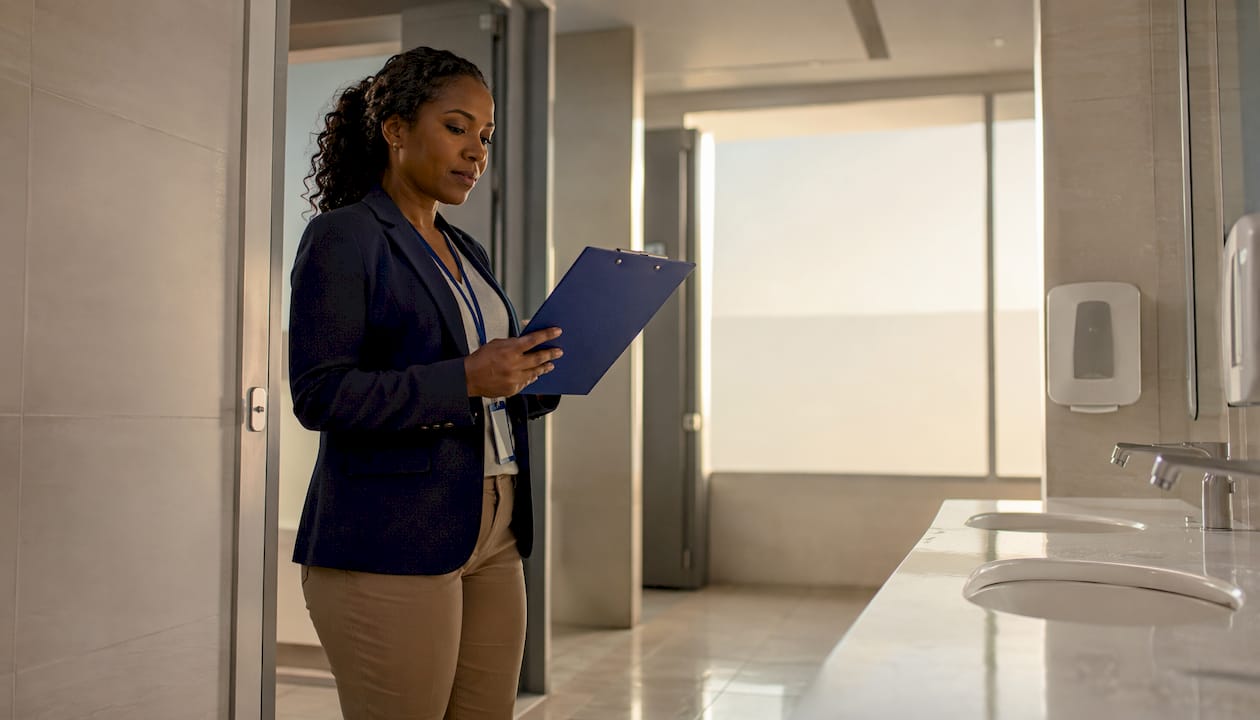
A 15–20 minute walk-through is enough to triage issues into “fix this week” and “schedule within 90 days.” Move through the space in a logical sequence: entrance and signage, cubicles, basin area, waste and sanitary bins, ventilation, and finally the services cupboard or meter access.
At each point, note observable failure signals rather than trying to score everything. Odour at the entrance means ventilation or waste management needs attention before anything cosmetic. Standing water around basins points to drainage or sealant failure. Faulty soap dispensers, broken cubicle locks, and missing or damaged signage are immediate fixes that cost very little. Damaged partitions, worn floor surfaces, and stained ceiling tiles belong on the 30–90 day schedule.
A washroom that smells clean is perceived as clean, even when the fixtures are dated. Odour control is not a finishing touch — it is the foundation of user confidence.
Tag each issue with one of two labels: Fix now (safety, hygiene, compliance, broken hardware) or Plan (aesthetics, efficiency, material upgrades). This keeps the audit output usable rather than overwhelming.
Pro Tip: Send a two-question pulse survey to staff or building occupants before the audit — “What bothers you most about the washroom?” and “What would make the biggest difference?” You will surface issues that a physical walk-through misses, particularly around privacy, noise, and consumable reliability.
Hygiene-first upgrades: what to do now and what to plan
The Tork research highlights significant user concern about public washroom hygiene, with many taking negative actions after a poor experience. That is not a perception problem you can ignore.
Do these now (low cost, high impact):
- Deep clean all surfaces, paying particular attention to grout lines, bin surrounds, and the underside of basin rims.
- Replenish and standardise consumables — soap, paper, sanitary products — and introduce a visible maintenance log on the back of each cubicle door.
- Replace or treat sanitary bins. Odour from sanitary waste is a leading driver of poor hygiene perception; continuous bin treatments cost very little and deliver an immediate improvement.
- Check hand-drying provision. Paper towels that run out or hand dryers that are broken are among the most-complained-about issues in commercial facilities.
Plan within 30–90 days:
| Action | Benefit | Approx. priority |
|---|---|---|
| Touchless taps and sensor soap dispensers | Reduce cross-contamination; lower consumable waste | High |
| High-capacity paper or foam dispensers | Fewer refill runs; lower complaint rate | High |
| Automatic soap dispenser replacement | Consistent dosing; touchless operation | Medium |
| Sanitary bin treatment programme | Sustained odour control between collections | High |
| Visible maintenance schedule | Signals care to users; reduces complaint frequency | Medium |
Inclusive hygiene deserves a mention here. Research from Essity shows that sensory sensitivities, arthritis, and chronic pain create invisible barriers in washrooms that standard specifications ignore. Softer soap formulations, lever-operated dispensers, and quieter hand dryers address these without significant cost. The commercial argument is straightforward: removing these barriers protects footfall and staff retention.
What do Part M and Part T require for commercial washrooms?
Compliance is not optional, and it shapes your upgrade priorities more than any aesthetic preference.
Approved Document T (introduced by the Building (Amendment) (England) Regulations 2024) requires non-domestic buildings to provide single-sex toilet facilities for men and women, with fully enclosed universal toilets where space allows or where single-sex provision is not practicable. The requirement applies to new buildings and material changes of use; it does not apply to schools, care homes, or custodial facilities. Universal toilets must open onto a corridor or supervised circulation space, not onto private or unsupervised areas.
Approved Document M sets the accessibility baseline. Every non-domestic building must provide a wheelchair-accessible unisex toilet. Wheelchair-accessible unisex toilets must not be used for baby changing. Separate-sex washrooms above a certain size should include an enlarged cubicle for ambulant disabled people, parents with children, and people carrying luggage.
Late-stage accessibility additions cost significantly more than early-stage design decisions. Parliamentary evidence consistently shows that retrofitting accessible provision signals poor care and inflates project cost — treat it as a foundational requirement, not an add-on.
Quick compliance checks for a refurbishment:
- Clear manoeuvring space of at least 465mm diameter column of clearance inside each cubicle door swing.
- Grab rails positioned to Approved Document M Diagram 21 specifications.
- Basin heights accessible to wheelchair users.
- Emergency assistance alarm in universal and ambulant toilet cubicles.
- Signage clearly indicating male, female, and universal facilities.
When a project involves a material alteration or change of use, consult your local building control officer or an accredited access consultant before finalising the specification. Getting this wrong at design stage is far more expensive than getting it right.
Which materials cut maintenance time and resist heavy use?
Material choice is where long-term operating cost is won or lost. The wrong finish in a high-footfall washroom means repainting or replacing within three years; the right one lasts a decade with routine cleaning.
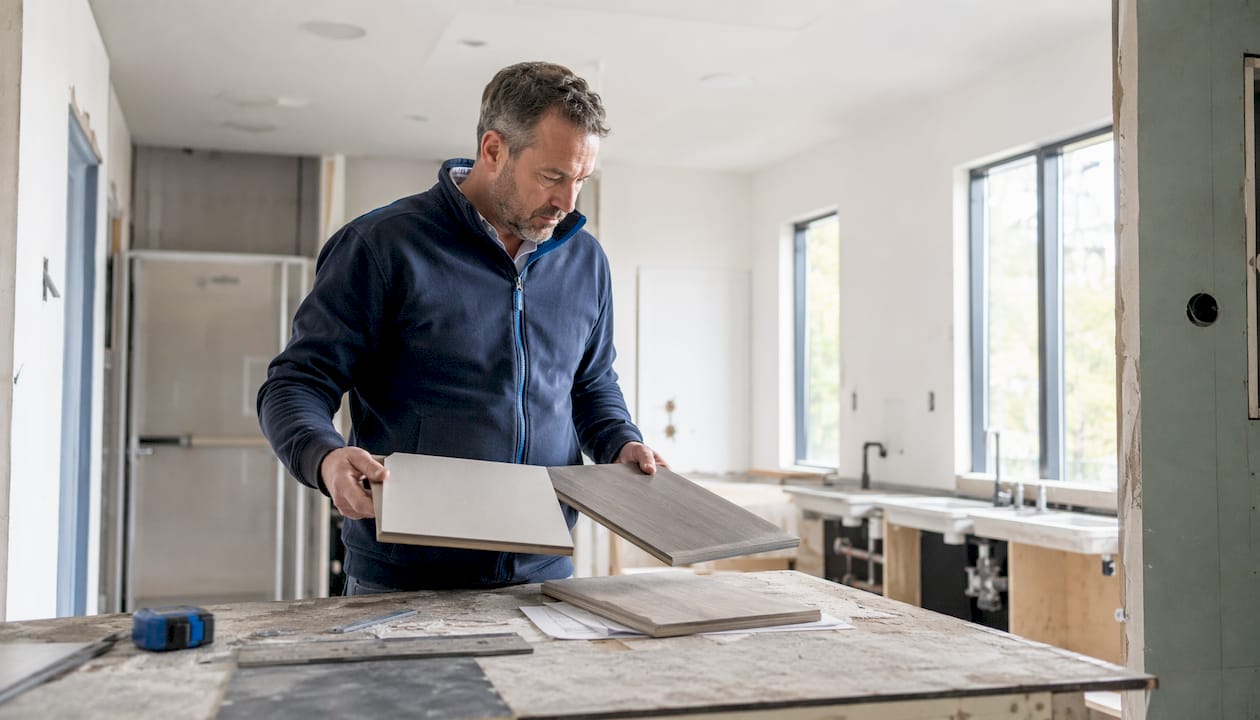
Compact grade laminate (CGL) is the workhorse of commercial cubicle construction. It is moisture-resistant through its full thickness, resists impact and graffiti, and does not delaminate in humid environments. Use it for cubicle panels, vanity units, and IPS access panels in medium to high-footfall settings.
High-pressure laminate (HPL) suits lower-footfall environments where aesthetics matter more than extreme durability. It offers a wider decorative range but is vulnerable to edge moisture ingress if not correctly sealed.
Stainless steel is the right call for fixtures, grab rails, and dispensers in any setting where hygiene certification matters. It withstands aggressive cleaning chemicals, resists corrosion, and is straightforward to inspect. The case for stainless steel fittings is particularly strong in healthcare, food service, and education settings.
Solid surfaces (such as Corian-type materials) work well for vanity tops and basin surrounds where seamless joints are a hygiene priority. They are more expensive but eliminate the grout lines that harbour bacteria.
- Choose concealed fixings wherever possible to prevent ligature risk and reduce vandalism.
- Specify IPS access panels that allow plumbing access without breaking out tiles or panels.
- Robust, commercial-grade hinges on cubicle doors reduce the single most common repair call-out.
- Keep a small stock of spare parts — replacement hinges, lock barrels, and dispenser components — on site to avoid extended downtime.
Pro Tip: Specify cubicles, vanity units, and IPS panels as a single coordinated package rather than sourcing each separately. Mismatched materials create inconsistent aesthetics and complicate future maintenance; a single specification ensures consistent finish and simplifies installation.
How do ventilation and water efficiency reduce operating costs?
Odour is a ventilation and waste-management problem, not a cleaning problem. Addressing it with air fresheners alone is treating the symptom. Proper extractor performance and targeted bin treatments address the cause.
Approved Document F sets ventilation requirements for sanitary accommodation. In practice, many commercial washrooms run on undersized or poorly maintained extractors that cannot achieve the required air-change rates. The result is persistent odour, condensation on surfaces, and accelerated material degradation — all of which increase maintenance cost.
Water and energy efficiency measures worth prioritising:
- Low-flow taps and spray heads reduce water consumption without affecting user experience. Sensor-operated taps also eliminate a cross-contamination point.
- Dual-flush or low-flush WC valves are a straightforward retrofit on most cisterns and deliver consistent water savings.
- Electric hand dryers replace paper towels, reduce waste-disposal frequency, and lower consumable spend. The right hand dryer for a commercial setting balances drying time (under 12 seconds for high-traffic use), noise level (particularly relevant in offices and healthcare), and hygiene certification.
Switching from paper towels to a high-efficiency electric hand dryer typically reduces hand-drying costs significantly over a three-year period, while also cutting the volume of waste going to landfill.
When specifying hand dryers, look for HEPA filtration in settings where airborne hygiene matters, and check noise ratings carefully for quieter environments. The Vent-Axia PrepDry and UltraDry Pro 1 are two options available from Simcodirect suited to different commercial footfall levels.
What layout and privacy changes make the biggest difference?
Large-scale remodelling is rarely necessary to materially improve user experience. Most high-impact changes are small, targeted, and achievable within a standard maintenance budget.
Zoning wet and dry areas is the most underused traffic-management tactic in busy commercial washrooms. Physically separating the basin area from the cubicle row reduces queuing, cuts slip hazards from water on the floor, and simplifies the cleaning regime. Even a low partition or a change in floor finish can achieve this without structural work.
Privacy improvements change user perception faster than almost any other intervention:
- Extend cubicle door overlaps to eliminate sight lines at the frame.
- Raise partition heights to at least 2.0m where ceiling height allows.
- Add modesty panels between urinals if not already present.
- Ensure inward-opening doors have the 465mm clearance column required by Approved Document T.
Baby-changing provision is frequently overlooked in commercial refurbishments. A fold-down changing table in an enlarged cubicle or a dedicated family room costs relatively little and removes a significant source of customer complaints. Signage and wayfinding matter too: clear, well-positioned signs reduce the number of people who enter the wrong facility, which in turn reduces complaints and improves throughput.
| Layout issue | Quick fix | Estimated disruption |
|---|---|---|
| Poor wet/dry separation | Floor finish change or low partition | Half a day |
| Inadequate cubicle privacy | Door overlap strips or taller panels | One day per cubicle |
| Missing baby-changing | Fold-down table in enlarged cubicle | Half a day |
| Unclear signage | Replace or add compliant signs | Two hours |
| Insufficient lighting | LED retrofit or additional fittings | One day |
For space-constrained washrooms, wall-hung fittings and recessed dispensers recover floor area and make cleaning faster.
What do UK commercial washroom upgrades typically cost?
Cost bands vary significantly by scope, building type, and specification level. These ranges reflect typical UK commercial projects in 2026 and should be treated as planning figures, not quotes.
| Scope | Typical cost range | Duration | Disruption level |
|---|---|---|---|
| Hygiene and consumable refresh | — | 1–3 days | Minimal (out of hours) |
| Touchless fittings and ventilation upgrade | — | 3–7 days | Low (staged) |
| Cubicle and surface replacement | — | 1–3 weeks | Medium (partial closure) |
| Full refurbishment (fixtures, finishes, layout) | — | 30–90 days | High (full closure) |
Allow a contingency of 10–15% on any project involving existing plumbing or concealed services; what is behind the wall is rarely what the drawings suggest.
Phasing to minimise disruption:
- Complete all immediate hygiene and compliance fixes in the first 30 days, scheduling work out of hours where possible.
- Phase cubicle replacement one bank at a time so at least partial provision remains available throughout.
- Sequence ventilation and plumbing work together to avoid opening the same service runs twice.
- Communicate the programme to building occupants in advance — a simple notice with expected dates and alternative provision reduces complaints significantly.
The ROI case is straightforward. Reduced cleaning hours, fewer maintenance call-outs, lower consumable spend, and a measurable reduction in negative reviews all contribute. The Tork data showing 17% of users avoid eating or drinking at a venue after a poor washroom experience translates directly into lost revenue for hospitality and retail operators.
How can Simcodirect help you source the right products?
Simcodirect stocks a focused range of commercial washroom products available for fast delivery across the UK, including commercial hand dryers, automatic soap dispensers, towel radiators, heating elements, and washroom accessories from trusted brands.
A practical procurement route for most projects runs as follows:
- Specify first: confirm your compliance requirements (Part M, Part T), footfall levels, and material preferences before approaching any supplier.
- Shortlist products: match hand dryer type, dispenser format, and heating solution to the specification.
- Measure on site: confirm recess depths, wall-fixing centres, and electrical supply positions before ordering.
- Order with staged delivery: align delivery dates to the installation programme to avoid on-site storage problems.
- Retain spares: order one set of spare consumable parts with the initial order to cover the first year of maintenance.
Pro Tip: For heating in accessible washrooms, consider a low surface temperature heating element to reduce burn risk — particularly relevant where the washroom serves vulnerable users or children.
Simcodirect offers a 30-day returns policy and fast UK delivery, which makes it a practical fit for phased projects where lead times matter.
Key takeaways
Hygiene, accessibility compliance, and ventilation are the non-negotiable first priorities for any commercial washroom upgrade in the UK — everything else phases in behind them.
| Point | Details |
|---|---|
| Hygiene is the commercial priority | Only 1 in 5 UK washrooms meet user expectations; over half of users take negative actions such as spending less time in a venue or leaving a poor review after a poor washroom experience. |
| Compliance shapes the specification | Approved Document T and Approved Document M set mandatory requirements for single-sex, universal, and accessible provision in non-domestic buildings. |
| Odour signals a ventilation problem | Address extractor performance and sanitary bin treatment before investing in cosmetic upgrades. |
| Material choice determines lifecycle cost | Compact grade laminate and stainless steel fittings reduce repair frequency and cleaning time in high-footfall settings. |
| Simcodirect for UK procurement | Simcodirect supplies commercial hand dryers, heating elements, and washroom accessories with fast UK delivery and a 30-day returns policy. |
A note on getting the priorities right
The instinct in most commercial refurbishments is to start with what is visible: new tiles, fresh paint, updated signage. That is understandable, but it is usually the wrong order. Hygiene and compliance failures carry real commercial and legal consequences; a freshly tiled washroom that smells bad or lacks an accessible cubicle has not actually improved.
The priority logic I apply is straightforward: fix what users notice first (odour, broken hardware, consumable gaps), then fix what the law requires (accessible provision, single-sex facilities, emergency alarms), then invest in durability and efficiency. Treating the specification as an integrated package — cubicles, vanity units, IPS panels, fittings, and heating specified together — reduces future costs and avoids the fragmented procurement that creates mismatched finishes and complicated maintenance.
The managers who get the best outcomes are the ones who run the audit first, set the compliance baseline, and then build the specification around those constraints rather than around a mood board.
Simcodirect: fast UK supply for your washroom upgrade
When the specification is set and the compliance boxes are ticked, procurement speed matters. Simcodirect offers a practical, no-fuss route to commercial washroom products with fast UK delivery and a 30-day returns policy — no lengthy procurement cycles or minimum order thresholds.
For hand-drying, the Biodrier Executive suits higher-spec environments, while the UltraDry Pro 1 handles high-traffic settings at a competitive price point. Heating elements for towel rails are available in standard, thermostatic, and timed thermostatic variants to match your control requirements. Browse the full range at simcodirect.co.uk or contact the team directly for lead-time advice and product shortlisting support.
Sources and further reading
- Approved Document T: Toilet Accommodation — GOV.UK, mandatory guidance for non-domestic buildings in England.
- Approved Document M: Access to and Use of Buildings, Vol 2 — GOV.UK, accessibility baseline for non-domestic buildings.
- The Building (Amendment) (England) Regulations 2024 — legislation.gov.uk, introduces Part T toilet accommodation requirements.
- Approved Document G: Sanitation, Hot Water Safety and Water Efficiency — GOV.UK, covers sanitary convenience and washing facilities.
- Tork: Only 1 in 5 Washrooms Meet Hygiene Expectations — Tork global insight, 2025 survey data on washroom hygiene perception.
- FMJ: Survey Finds Only 1 in 5 Washrooms Meet Cleanliness Expectations — Facilities Management Journal, UK market summary of Tork research.
- Inclusive Hygiene in Washrooms — Essity, 2025 reporting on sensory and accessibility barriers.
- Parliamentary Written Evidence on Accessibility and Specification — UK Parliament, evidence on the cost of late-stage accessibility retrofits.