


Bathroom shelf fitting explained: the UK homeowner's guide
A bathroom shelf fitting is the complete hardware system used to mount a shelf securely to a bathroom wall. That means the brackets, wall plugs, screws, and any supporting rods or hidden fixings that hold everything in place. It is not just the shelf itself. The fitting is what keeps it there safely, day after day, in a humid environment where the wrong choice of fixing will eventually fail.
What makes this genuinely important in UK homes is the variety of wall constructions you are likely to encounter:
- Masonry walls (brick, concrete block, or stone) are the strongest option for shelf fixings and the most forgiving.
- Stud partition walls (timber frames covered with plasterboard) require fixings anchored into the studs themselves.
- Dot and dab walls (plasterboard bonded to masonry with adhesive blobs) create a hidden cavity that catches many homeowners off guard.
Each wall type demands a different fixing approach. The bracket itself is rarely the weak point. As the Suffolk Latch Company puts it plainly: a bracket is only as strong as the wall it is fixed to.
Table of Contents
- What types of bathroom shelf fittings are there?
- How to fit bathroom shelves: a step-by-step guide
- Expert tips and common pitfalls to avoid
- Key takeaways
- Why visible brackets deserve more credit than they get
- Simcodirect: quality bathroom fittings delivered to your door
What types of bathroom shelf fittings are there?
The three main categories cover most situations you will encounter.
Bracketed shelves use visible wall-mounted brackets to support the shelf board from below. They are the most common type and the most forgiving, particularly on older UK properties where walls are uneven or not perfectly plumb. Visible brackets suit heavier loads and give you room to adjust during fitting.
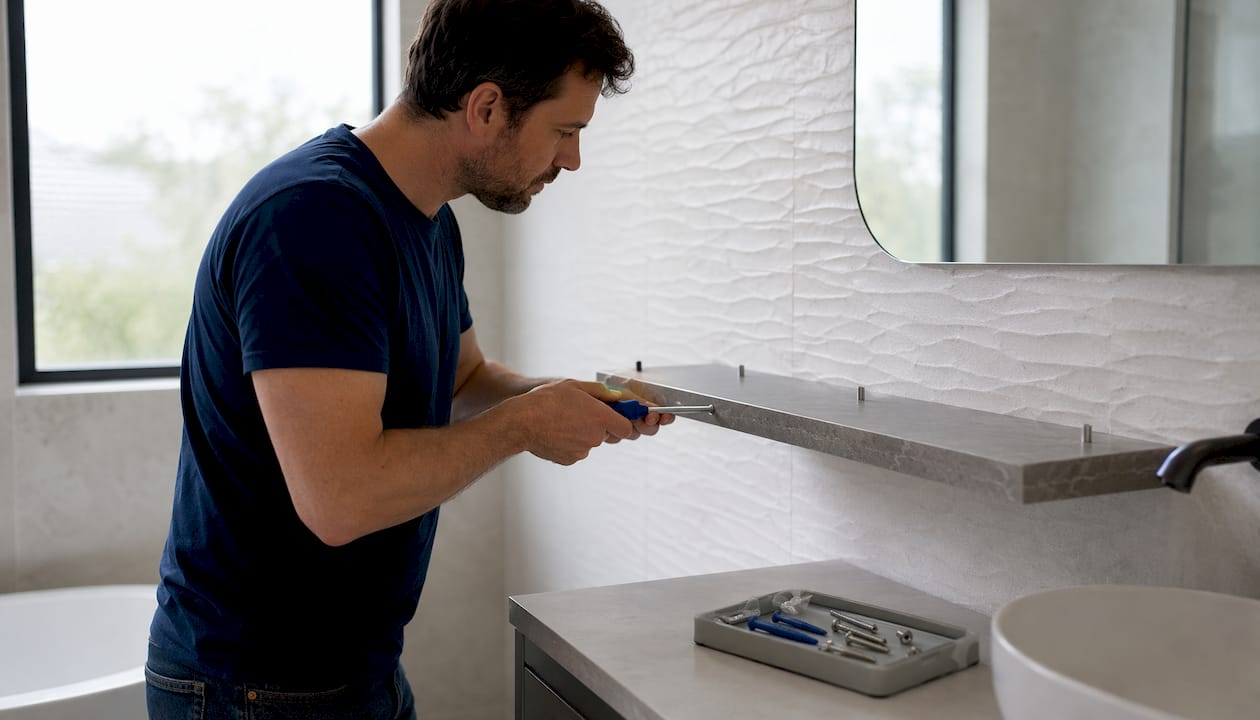
Floating shelves hide their fixings inside the shelf board for a cleaner look. The brackets or steel rods are recessed, so the shelf appears to project from the wall with no visible support. They work well for lighter bathroom storage, but they depend heavily on accurate installation and a sound wall behind them.
Specialist rod and rail systems sit somewhere between the two, often used for glass or narrow shelves above basins.
Choosing between them comes down to four things: your wall type, the weight you plan to store, the shelf span, and how much moisture the shelf will face. For the fixings themselves, the right choice by wall type is:
- Masonry: Fischer DuoPower plugs, rated for 50kg and above with appropriate screws.
- Plasterboard (stud wall): GripIt fixings or Toggler SnapToggle anchors, with GripIt Red, Brown, and Blue fixings, which have increasing load capacities suitable for heavier shelves and fittings.
- Dot and dab walls: Corefix heavy-duty fixings, which bridge the cavity and support up to 100kg with four fixings.
For timber choice, teak leads for steamy or poorly ventilated bathrooms, while oak is the balanced all-rounder for most UK settings.
Pro Tip: On older properties with imperfect walls, always choose visible brackets over floating designs. They allow minor adjustments during fitting and carry heavier loads more reliably.
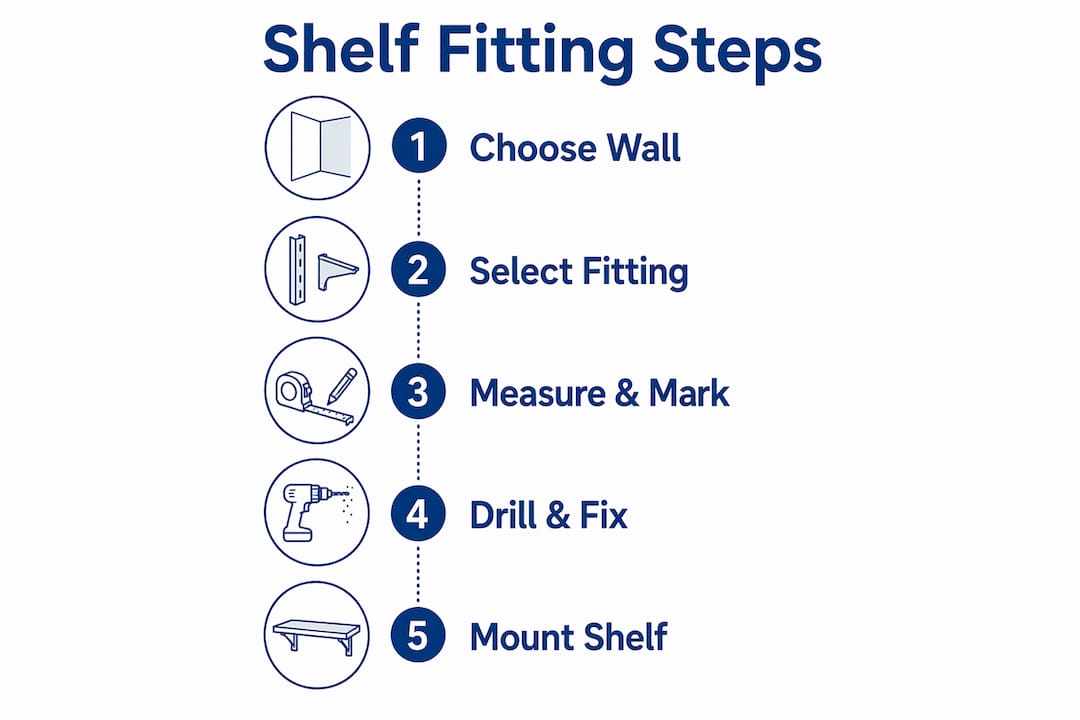
How to fit bathroom shelves: a step-by-step guide
-
Identify your wall type. Tap the wall and listen. A solid thud suggests masonry; a hollow sound points to plasterboard or dot and dab. Use a stud finder to locate timber studs on partition walls.
-
Mark the shelf position. Hold the shelf or a batten at the desired height and use a spirit level to draw a pencil line. Get this right before anything else.
-
Space your brackets correctly. Space brackets 500–700mm apart, with a 100–150mm overhang at each end. This distributes weight evenly and prevents sagging.
-
Check for hidden pipes and wires. Run a pipe and wire detector across the entire area before drilling. Bathroom walls frequently conceal plumbing, and a misplaced drill hole can cause serious damage.
-
Drill carefully. Use a masonry bit for solid walls. If drilling through tiles, switch off hammer mode entirely to avoid cracking them.
-
Seal the holes. Before inserting wall plugs, fill each drilled hole with silicone sealant. This stops moisture tracking behind the tiles, which leads to mould and structural deterioration over time.
-
Insert wall plugs and fit brackets. Push plugs flush, then attach brackets using screws appropriate for your wall type. Tighten gradually while checking level with your spirit level throughout.
-
Secure the shelf. Place the shelf onto the brackets and insert fixing screws. Tighten each one progressively rather than fully tightening one before moving to the next.
-
Leave the silicone to cure. Allow a few hours before placing anything on the shelf or using the shower or bath nearby.
Pro Tip: On dot and dab walls, standard plastic plugs will pull straight through the plasterboard under load. Use Corefix fixings specifically, as they extend through the cavity and grip the masonry behind.
Expert tips and common pitfalls to avoid
The single most common mistake is treating all walls as equivalent. A strong bracket on a poorly fixed plasterboard wall will still fail. Wall integrity comes first, always.
Common pitfalls:
- Using standard plastic rawlplugs in plasterboard. They are not designed for it and will pull out.
- Skipping the pipe and wire check. Bathroom plumbing is rarely where you expect it.
- Fitting floating shelves on walls that are not flat or true. Hidden fixings offer no room for adjustment once drilled.
- Ignoring moisture when choosing screws. Zinc-plated screws rust in bathroom humidity and leave brown stains on walls and shelves. Use stainless steel grade A2 for standard bathrooms and A4 for wet areas such as shower enclosures.
Maintenance tips:
- Inspect fixings every six to twelve months for any sign of movement or corrosion.
- Re-seal around drilled holes if silicone shows cracking or discolouration.
- Wipe shelves dry after steamy showers if the timber finish is not fully sealed.
For fitted bathroom furniture that integrates shelving with cabinetry, fitted bathroom units offer a more permanent solution where individual shelf fittings are built into the overall structure.
GripIt Red fixings are rated to 74kg, Brown to 93kg, and Blue to 113kg — figures that matter when you are storing anything heavier than toiletries on a plasterboard wall.
For a broader look at how shelf fittings sit within a full bathroom update, the space-saving bathroom fittings guide on the Simcodirect blog covers the wider picture.
Key takeaways
A bathroom shelf fitting is only as reliable as the fixing chosen for the specific wall behind it — get the wall type right first, and everything else follows.
| Point | Details |
|---|---|
| Wall type determines everything | Identify masonry, stud, or dot and dab before selecting any fixing. |
| Match fixings to load | GripIt, Corefix, and Fischer DuoPower each suit different walls and weight requirements. |
| Seal every drilled hole | Silicone sealant prevents moisture ingress behind tiles and extends shelf life. |
| Use corrosion-resistant screws | Grade A2 stainless steel for bathrooms; A4 for wet zones such as shower areas. |
| Simcodirect for quality fittings | Simcodirect stocks bathroom accessories and storage solutions suited to UK wall types, with fast delivery and a 30-day returns policy. |
Why visible brackets deserve more credit than they get
Most buyers gravitate towards floating shelves because they look cleaner. That preference is understandable, but it quietly ignores a practical reality in older UK homes: walls are rarely perfect. Dot and dab construction, uneven plaster, and decades of minor settlement mean that hidden fixings often create more problems than they solve. A floating shelf on a compromised wall is not a design choice. It is a delayed repair job.
Visible brackets, by contrast, let you adjust during fitting, accommodate minor wall imperfections, and carry heavier loads without demanding the same precision. They have been unfairly associated with a dated aesthetic when, in fact, the right bracket in the right finish looks considered rather than clunky. The real skill in bathroom shelf fitting is not hiding the hardware. It is choosing hardware that actually holds.
Simcodirect: quality bathroom fittings delivered to your door
Fitting a bathroom shelf properly starts with having the right products. Simcodirect supplies a broad range of bathroom storage solutions and washroom accessories suited to UK homes, from mirror cabinets to towel rails, all backed by trusted brands and competitive pricing.
What sets Simcodirect apart is the combination of product quality and practical convenience: fast UK delivery, a straightforward 30-day returns policy, and a catalogue that covers both residential and commercial needs. Whether you are refreshing a single shelf or planning a full bathroom update, you will find fittings that meet the standard your walls deserve. Browse the full range at simcodirect.co.uk and order with confidence.