


What is an infrared bathroom heater? Your 2026 guide
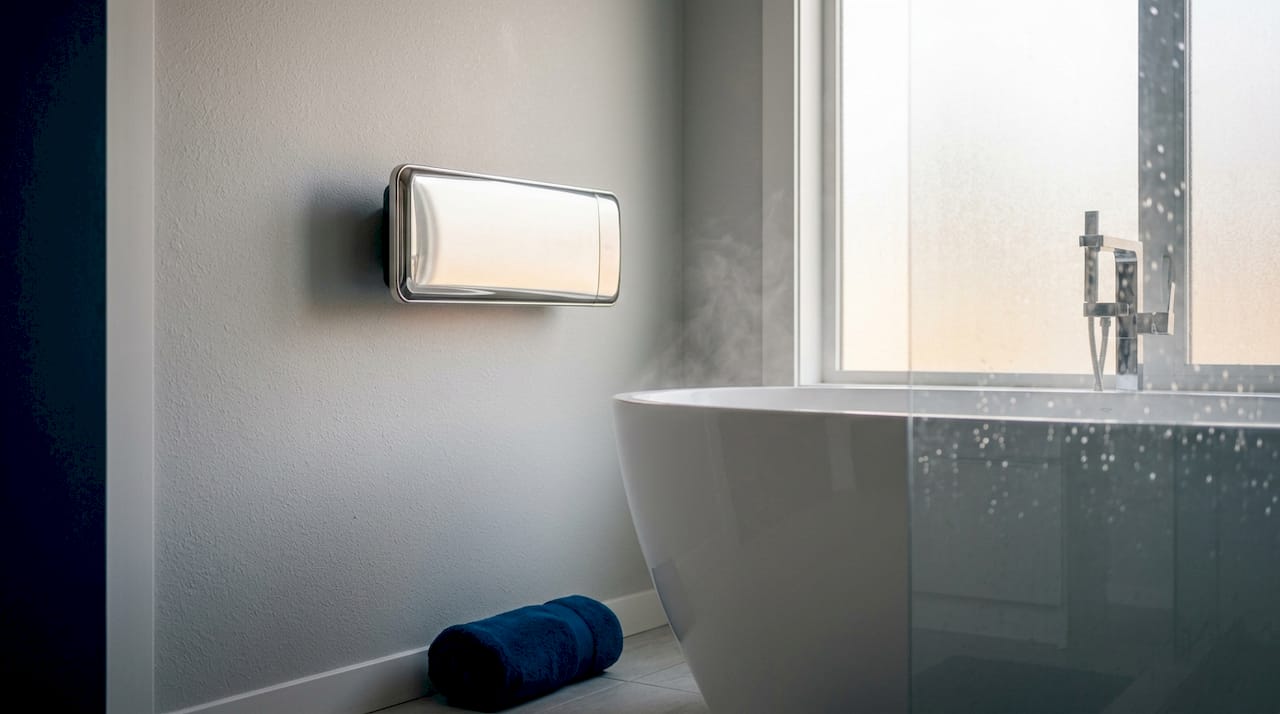
An infrared bathroom heater is defined as an electric heating panel that emits electromagnetic waves to warm surfaces, objects, and people directly, rather than heating the surrounding air. This makes it fundamentally different from convection heaters, which rely on warming air that then circulates around the room. The result is instant, targeted warmth from the moment you switch it on, with no waiting for a room to heat up. For bathrooms specifically, that combination of speed, efficiency, and moisture control makes infrared heating one of the most practical options available in 2026.
What is an infrared bathroom heater and how does it work?
Infrared heaters operate on the same basic principle as sunlight. They emit infrared radiation, a form of electromagnetic energy, which travels through the air without warming it and is absorbed by whatever solid surface it strikes. In a bathroom, that means tiles, walls, mirrors, towels, and you are all warmed directly. The air temperature rises as a secondary effect, not the primary one.
This distinction matters enormously in a bathroom environment. Conventional convection heaters warm the air first, which then rises, cools, and falls in a cycle. That cycle picks up moisture from wet surfaces and keeps it circulating. Infrared panels, by contrast, warm bathroom surfaces directly, which reduces condensation and prevents the damp conditions that lead to mould growth.
IP ratings and bathroom zone compliance
Not every infrared heater is suitable for bathroom use. UK electrical safety regulations divide bathrooms into zones based on proximity to water sources. Zone 0 is inside the bath or shower itself. Zone 1 is directly above it. Zone 2 extends outward by 0.6 metres. Each zone requires a minimum Ingress Protection (IP) rating to confirm the unit can withstand moisture exposure safely.
A heater installed in Zone 1 requires at least IP45. Zone 2 installations typically require IP44 as a minimum. Panels mounted outside these zones on a dry ceiling or wall still need an appropriate IP rating for a bathroom environment. Always check the manufacturer’s specification before purchasing.
Key operational features of infrared bathroom heaters include:
- Direct heat transfer. Infrared waves heat solid objects, not air, so energy is not wasted warming empty space.
- Near-instant warmth. Infrared heaters provide warmth almost immediately after switching on, unlike radiator systems that take time to reach temperature.
- Moisture reduction. Warm surfaces mean less condensation, which directly reduces damp and mould risk.
- Silent operation. No fan, no moving parts, and no noise.
- Flexible placement. Panels can be ceiling or wall mounted to suit the bathroom layout.
Pro Tip: Mount your infrared panel on the ceiling directly above the area where you stand most often. Ceiling placement gives the most even heat distribution across the floor and walls below, and keeps the panel well clear of water splash zones.
What are the benefits of using infrared heaters in bathrooms?
The benefits of infrared heating in a bathroom go beyond simple warmth. They touch on energy use, air quality, health, and long-term running costs.
1. Exceptional energy efficiency. Infrared heating converts almost 100% of electricity into usable heat. That conversion rate is significantly higher than fan heaters or older electric radiators, which lose energy through air movement and heat dissipation. Less wasted energy means lower electricity bills over time.
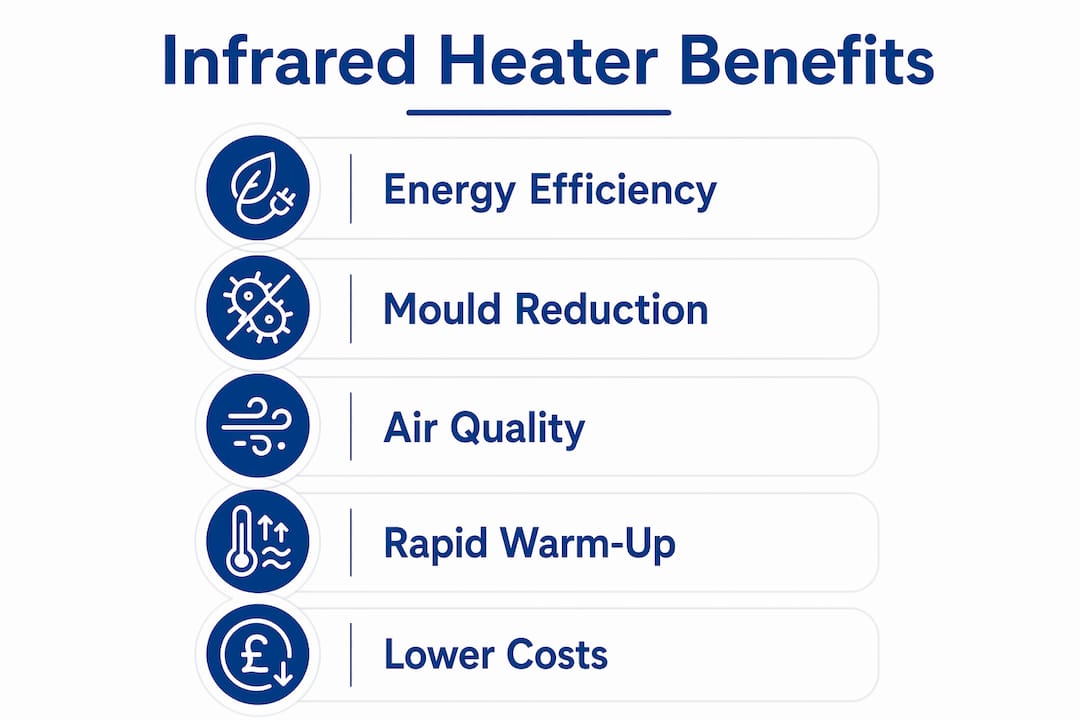
2. Reduced mould and damp. Keeping tiles and walls warm creates a healthier bathroom environment. When surfaces stay above the dew point, moisture cannot condense on them. This is the single most effective passive defence against bathroom mould, and it requires no additional products or effort.
3. Better air quality. Infrared panels do not circulate air, which means they do not stir up dust, allergens, or humid air. For anyone with respiratory sensitivities or allergies, this is a meaningful advantage over fan heaters.
4. Rapid heat-up time. A bathroom is typically used in short bursts. You need warmth immediately, not after a 20-minute warm-up period. Infrared delivers that. The panel reaches full output within seconds, making it genuinely practical for morning routines.
5. Lower running costs. Because the heat-up time is so short and the energy conversion so efficient, you run the heater for less time per session. That compounds into real savings across a year of daily use.
A warm bathroom also supports the kind of relaxed, restorative experience that hot baths provide for wellbeing. Infrared heating makes that experience consistent regardless of the season.
How do infrared bathroom heaters compare to other bathroom heating options?
Choosing the right heating type for a bathroom means understanding what each option actually does, not just what it costs to buy.
| Heating type | Heat delivery method | Moisture impact | Heat-up speed | Running cost |
|---|---|---|---|---|
| Infrared panel | Radiant, heats surfaces directly | Reduces condensation | Near instant | Low |
| Electric fan heater | Convection, heats and circulates air | Can increase humidity circulation | Fast | Moderate to high |
| Towel rail radiator | Convection, heats air gradually | Neutral | Slow | Moderate |
| Underfloor heating | Radiant, heats floor surface | Reduces condensation | Very slow | Low to moderate |
Infrared panels and underfloor heating share the same radiant principle, but underfloor systems take far longer to reach temperature and require significant installation work. Infrared panels are far simpler to install and respond immediately. Fan heaters warm a room quickly but move humid air around, which can worsen condensation on cold surfaces like mirrors and windows. Towel rail radiators serve a dual purpose but heat the room slowly and are rarely sufficient as a sole heat source in colder months.
For a bathroom that needs fast, efficient, and moisture-conscious heating, infrared panels sit at the top of the category. They work particularly well in bathrooms where ventilation and climate control are already considered as part of the room’s design.
What installation considerations and safety standards apply?
Installation is where many homeowners make avoidable mistakes. Getting it right from the start protects both safety and performance.
Infrared bathroom heaters require professional installation with a hardwired connection via a fused spur. Standard plug sockets are not permitted in bathroom zones under UK wiring regulations (BS 7671). A qualified electrician must carry out the work to meet Part P of the Building Regulations, which governs electrical safety in dwellings.
Sizing is equally critical. Correct sizing and placement of infrared panels determine whether the heater delivers full comfort or merely takes the edge off the cold. A panel that is too small for the room will run constantly without reaching a comfortable temperature. As a general rule, calculate the wattage needed based on the room’s volume and insulation quality, not just its floor area.
Key installation considerations:
- Use a qualified electrician. Part P compliance is not optional. An unqualified installation can void your home insurance and create a genuine safety risk.
- Choose the correct IP rating. Match the panel’s IP rating to the bathroom zone where it will be installed.
- Position for coverage. Panels positioned high on walls or ceilings distribute heat downward evenly, maximising comfort across the floor area.
- Size correctly. Undersizing is the most common mistake. A professional can calculate the right wattage for your specific bathroom dimensions and insulation.
- Avoid plug-in units in wet zones. Plug-in infrared heaters are only suitable for rooms outside bathroom zones. Inside a bathroom, hardwiring is the standard.
Pro Tip: Before booking an electrician, measure your bathroom’s length, width, and ceiling height. Share those figures when requesting a quote. It helps the installer recommend the correct panel wattage from the outset, which saves a second visit.
A well-planned bathroom renovation accounts for heating from the start. The UK bathroom renovation planning guide covers how to integrate heating decisions into a broader project budget effectively.
Key takeaways
Infrared bathroom heaters deliver near-instant, energy-efficient warmth by heating surfaces directly, making them the most practical choice for moisture control and comfort in UK bathrooms.
| Point | Details |
|---|---|
| Direct heat delivery | Infrared waves warm surfaces and people, not air, for immediate and efficient comfort. |
| Moisture and mould control | Warm surfaces reduce condensation, cutting the conditions that cause bathroom mould. |
| Energy efficiency | Near-100% electricity-to-heat conversion keeps running costs lower than fan or convection heaters. |
| Professional installation required | UK regulations (BS 7671, Part P) mandate hardwired connections via a fused spur by a qualified electrician. |
| Correct sizing is non-negotiable | Undersizing a panel is the most common mistake; always calculate wattage based on room volume. |
Why I think most people underestimate infrared bathroom heating
Most homeowners I speak to think of infrared heaters as a luxury addition, something you bolt on after the real decisions are made. That framing is wrong, and it costs people money.
The moisture control benefit alone justifies the investment. Bathroom mould is not just unsightly. It damages grout, degrades sealant, and in persistent cases affects air quality throughout the home. A correctly sized infrared panel, mounted on the ceiling and running during and after your shower, does more to prevent that damage than any extractor fan working alone. The two work best together, but the infrared panel addresses the root cause: cold surfaces.
The second thing people consistently get wrong is sizing. I have seen bathrooms with panels that are genuinely too small, running flat out and still leaving the room cold in january. The fix is always the same: the panel needed to be one size larger. That mistake is entirely avoidable with a five-minute conversation with a qualified installer before purchase.
The long-term picture is also better than most people expect. Because infrared heats instantly and converts electricity so efficiently, the actual cost per session is low. Over a year of daily use, the savings compared to running a fan heater for the same period are real and measurable. Infrared heating in a bathroom is not a premium option. It is the sensible one.
— Carl
Bathroom heating and washroom products at Simcodirect
Simcodirect stocks a wide range of bathroom and washroom products built for both residential and commercial spaces. Whether you are fitting out a single bathroom or upgrading a full facility, the range covers heating solutions, hand dryers, towel dispensers, and washroom accessories from trusted brands.
The Simcodirect bathroom range includes products selected for quality, compliance, and value. If you are also looking at washroom accessories to complete the space, the UltraDry Pro 1 hand dryer in brushed satin is a popular choice for both home and commercial bathrooms. Simcodirect offers fast delivery and a 30-day returns policy, so you can order with confidence.
FAQ
What is an infrared bathroom heater used for?
An infrared bathroom heater warms people and surfaces directly using electromagnetic waves, providing instant heat and reducing condensation. It is used for comfort heating and moisture control in bathrooms.
Do infrared bathroom heaters need professional installation?
Yes. UK wiring regulations (BS 7671) require infrared bathroom heaters to be hardwired via a fused spur by a qualified electrician. Plug-in connections are not permitted within bathroom zones.
Are infrared heaters energy efficient in bathrooms?
Infrared heaters convert almost 100% of electricity into heat, making them among the most energy-efficient bathroom heating options available. Their near-instant heat-up time also reduces the total running time needed per session.
How do I choose the right size infrared panel for my bathroom?
Calculate the required wattage based on your bathroom’s volume and insulation level, not just floor area. Undersizing is the most common installation mistake. A qualified installer can recommend the correct output for your specific room.
Can infrared heaters reduce bathroom mould?
Yes. By warming tiles, walls, and other surfaces, infrared heaters keep those surfaces above the dew point, which prevents condensation from forming. Less condensation means significantly reduced conditions for mould growth.