


Why ceramic bathroom accessories are so popular
Ceramic bathroom accessories are defined by their combination of non-porous durability, hygienic surfaces, and timeless aesthetic appeal, making them the preferred choice in modern bathroom renovations across the UK. The question of why ceramic bathroom accessories are popular has a clear answer: no other widely available material matches ceramic’s ability to resist moisture, bacteria, and visual wear simultaneously. The UK bathroom market is shifting firmly towards ‘quiet luxury’ and wellness, with homeowners prioritising materials that last rather than disposable alternatives. Ceramic sits at the centre of that shift, offering both practical performance and the kind of considered, tactile beauty that elevates a bathroom from functional to genuinely pleasurable.
Why are ceramic bathroom accessories popular?
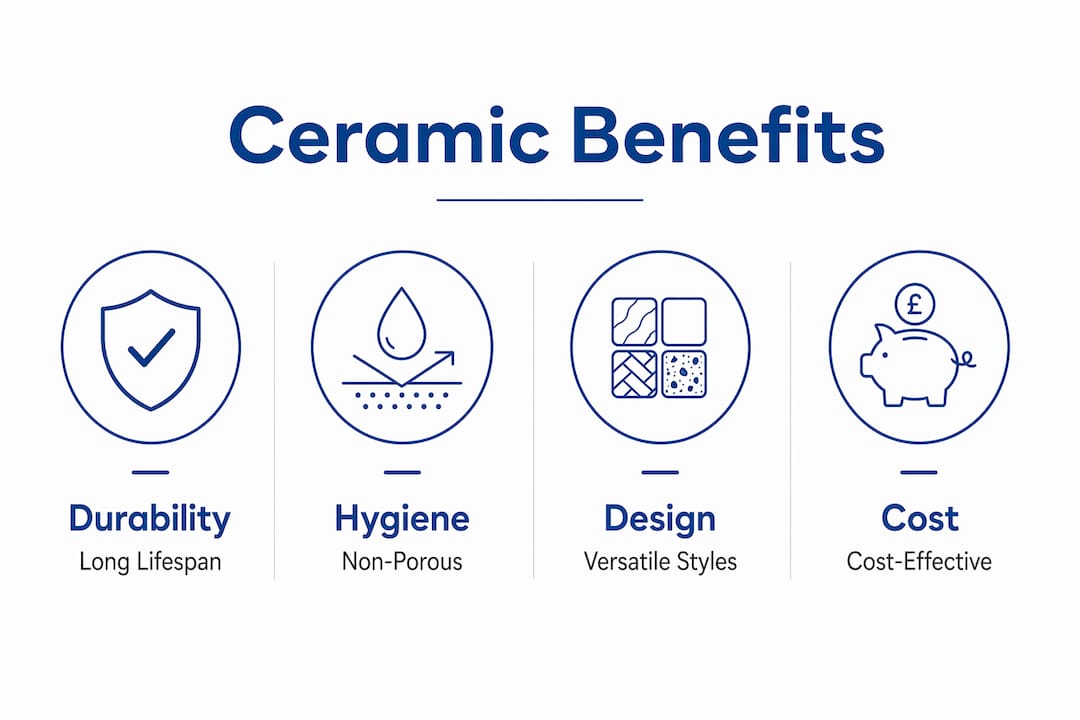
Ceramic accessories earn their popularity through a combination of material science and design versatility that no single alternative replicates. The material is fired above 1,000°C, which creates a dense, non-porous structure that resists staining, moisture absorption, and degradation. Plastic and resin accessories cannot match that structural integrity, particularly in the humid, temperature-variable conditions of a British bathroom. The result is an accessory that looks as good in year five as it did on the day of installation.
The UK market reflects this preference clearly. Demand for durable, non-disposable materials is rising as homeowners move away from fast-turnover bathroom products. That shift is partly cultural and partly practical: replacing cheap plastic accessories every two years costs more over time than investing once in ceramic. Ceramic also carries a visual weight and presence that plastic simply cannot replicate, which matters enormously to homeowners treating their bathrooms as genuine design spaces.
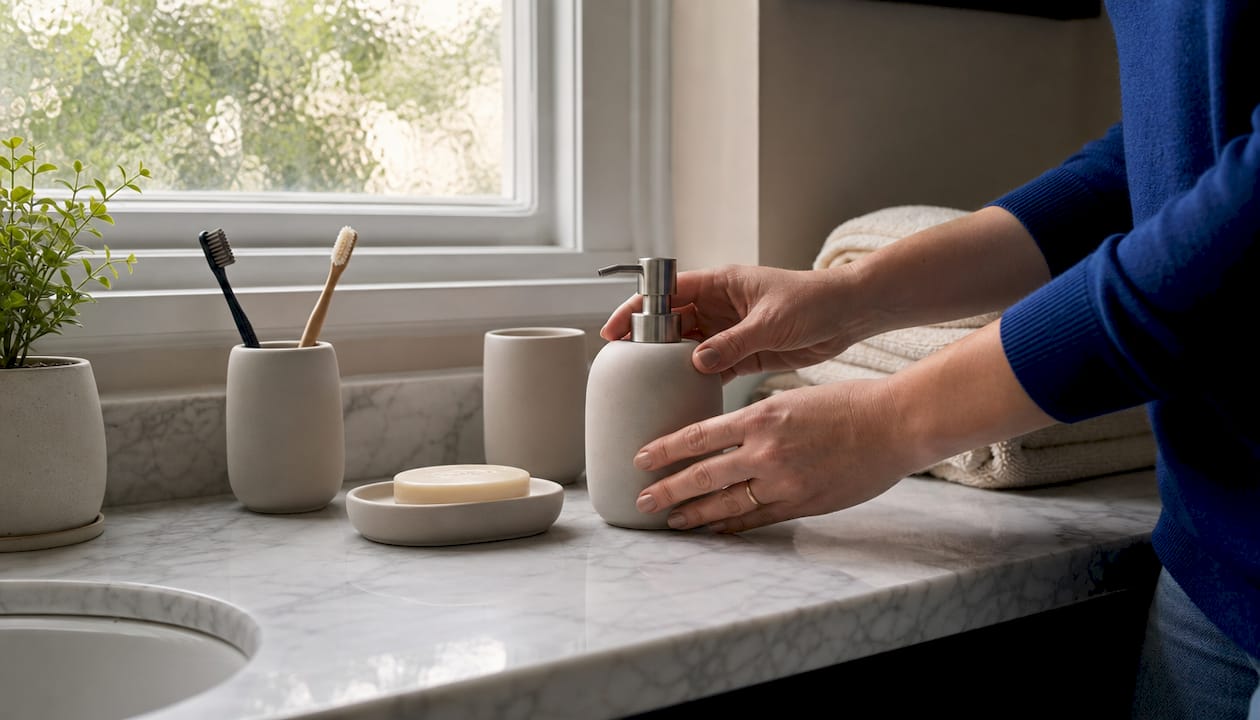
Material advantages of ceramic over alternative bathroom materials
Ceramic’s physical properties give it a clear edge over plastic, resin, and even some metal alternatives in a bathroom setting.
- Non-porous surface. The glazed finish prevents liquids, soap residue, and bacteria from penetrating the material. Plastic surfaces, by contrast, develop micro-scratches over time that trap residue and odours.
- Colour stability. Ceramic does not yellow, fade, or discolour when exposed to UV light or cleaning products. A white ceramic soap dish stays white; a plastic equivalent rarely does.
- Odour resistance. Because the surface is sealed, ceramic does not absorb or emit odours. Plastic accessories in humid bathrooms often develop a faint but persistent smell within months.
- Functional weight. Ceramic’s substantial mass prevents accessories from sliding or tipping on wet surfaces. This solves one of the most common frustrations with lightweight plastic alternatives.
- Resistance to degradation. Resin warps and becomes brittle in sustained humidity. Ceramic remains structurally stable indefinitely under normal bathroom conditions.
Pro Tip: If you are concerned about ceramic chipping, place accessories on a small rubber mat or cork pad. The mat absorbs impact and keeps the piece stable without altering the aesthetic.
Ceramic does have one acknowledged limitation: it is brittle and will chip or crack if dropped onto a hard floor. That brittleness is the trade-off for its density and non-porous quality. Handled with reasonable care, ceramic accessories outlast every plastic or resin equivalent on the market.
How do ceramic accessories fit into current UK bathroom design trends?
British bathroom design has moved decisively away from the clinical, all-white aesthetic of the early 2000s. The new direction is tactile, warm, and considered. Ceramic accessories are central to that change.
“Bathrooms are becoming private retreats. Ceramic adds tactile variety to achieve a calm, luxurious ambiance that other materials simply cannot deliver.” Design experts cited by House & Garden
Design trend searches rose 114% year-on-year for warm metallic finishes paired with matte ceramic accessories. That figure reflects a genuine shift in how homeowners approach bathroom styling, not a passing moment. Matte ceramic in warm whites, sage greens, and clay tones coordinates naturally with brass and brushed gold fittings, creating the layered, grounded look that defines the ‘quiet luxury’ aesthetic.
Ceramic accessories contribute to this look in specific ways:
- Texture contrast. Against large-format stone-effect tiles, a matte ceramic soap dispenser introduces a softer, handcrafted quality that breaks visual monotony.
- Colour anchoring. Neutral ceramic tones tie together varied bathroom finishes without competing with them.
- Scale and proportion. Ceramic pieces tend to be compact and considered in form, which suits the smaller bathroom footprints common in British homes.
Understanding why layering textures matters in interior design helps explain ceramic’s role here. It is not simply decorative. Ceramic introduces a material contrast that makes the overall space feel more intentional and complete.
What are the hygiene and maintenance benefits of ceramic accessories?
Ceramic’s hygiene credentials are among the strongest reasons for its popularity, particularly for homeowners who want a bathroom that is genuinely easy to keep clean.
- Bacteria resistance. The glazed ceramic surface prevents scum build-up and reduces cleaning frequency compared with plastic alternatives. Bacteria cannot penetrate the sealed surface, which matters in a space used daily.
- Simple cleaning routine. A damp cloth removes the vast majority of soap residue and water marks from ceramic. No specialist products are required, and the surface does not need periodic sealing or treatment.
- No odour retention. Unlike plastic, ceramic does not absorb the ambient odours of a bathroom environment. This keeps accessories smelling neutral even after extended use.
- Long-term appearance. Because the glaze does not degrade, ceramic accessories maintain their original appearance for years without the yellowing or surface dulling that affects plastic.
Pro Tip: The ceramic body of a soap dispenser or toothbrush holder will last indefinitely, but the pump mechanism on dispensers is a weaker component. Dispenser pumps often need replacing every few years. Buy accessories where replacement pumps are available separately to extend the life of the ceramic body.
Ceramic’s higher upfront cost is offset by its longevity and reduced replacement frequency over a 3–5 year period. Plastic and resin require replacement due to warping and staining; ceramic does not. That makes ceramic the more cost-effective choice over any meaningful time horizon.
How to select and coordinate ceramic accessories for your bathroom
Choosing ceramic accessories well requires thinking about the bathroom as a whole rather than selecting individual pieces in isolation.
Matching ceramic accessory sets reduce vanity clutter by giving every bathroom essential a dedicated, visually consistent home. A coordinated set covering soap dish, dispenser, toothbrush holder, and tumbler creates a sense of order that individual mismatched pieces cannot achieve. The visual harmony also makes a small bathroom feel more considered and spacious.
| Selection factor | What to look for |
|---|---|
| Glaze finish | Matte for warmth and texture; gloss for a cleaner, more traditional look |
| Colour palette | Neutral tones coordinate with most tile and fitting choices |
| Weight and stability | Heavier pieces stay put on wet surfaces; check base dimensions |
| Set completeness | Prioritise sets that include all daily-use items for visual consistency |
| Pump replaceability | Confirm dispenser pumps are available as separate components |
Balancing ceramic with other bathroom materials is straightforward. Ceramic pairs naturally with natural stone, wood-effect surfaces, and warm metal finishes. It sits less comfortably alongside very shiny chrome in a purely contemporary setting, though matte ceramic with brushed chrome works well. The key principle is that ceramic should complement the dominant material in the room rather than compete with it.
Treat ceramic accessories as investment pieces. Decorative storage solutions that combine function with lasting visual appeal deliver more value than items chosen purely on price. A well-chosen ceramic set purchased once will outlast several rounds of cheaper alternatives.
Key takeaways
Ceramic bathroom accessories are popular because they combine non-porous durability, genuine hygiene advantages, and design versatility that no plastic or resin alternative matches.
| Point | Details |
|---|---|
| Material superiority | Firing above 1,000°C creates a non-porous surface that resists stains, bacteria, and degradation. |
| Design alignment | Matte ceramic coordinates with warm metals and neutral palettes driving current UK bathroom trends. |
| Hygiene advantage | Glazed surfaces prevent bacteria penetration and reduce cleaning frequency versus plastic. |
| Long-term value | Ceramic’s durability lowers replacement costs over 3–5 years compared with plastic or resin. |
| Coordinated selection | Matching sets improve spatial organisation and create a more considered, finished bathroom aesthetic. |
Why I keep recommending ceramic, even when clients hesitate at the price
The most common objection I hear from homeowners is the upfront cost. A ceramic soap dispenser costs noticeably more than a plastic equivalent, and that gap feels significant when you are already managing a full bathroom renovation budget. My honest view is that the hesitation is understandable but almost always short-sighted.
I have seen enough bathrooms at the two-year and five-year mark to know what happens to plastic accessories in a genuinely humid British bathroom. The yellowing, the warping, the faint smell that no amount of cleaning removes. Ceramic simply does not do those things. The glaze holds, the colour holds, and the piece looks intentional rather than tired.
What I find more interesting is the design argument, which I think is underappreciated. Ceramic introduces a material quality that changes how a bathroom feels, not just how it looks. There is a weight and solidity to a ceramic soap dish that makes the whole space feel more permanent and considered. That is not a small thing when you are trying to create a bathroom that functions as a genuine retreat rather than just a utility room.
My practical advice is to prioritise the pieces you touch every day: soap dispenser, toothbrush holder, and soap dish. Get those right in ceramic, and the rest of the room follows. You do not need to replace everything at once. Start with the vanity surface and work outward.
— Carl
Quality bathroom accessories worth considering
Upgrading your bathroom accessories is one of the most cost-effective ways to improve both the function and feel of the space. Simcodirect stocks a carefully selected range of premium bathroom and washroom accessories built for lasting performance and considered design.
The Bobrick Double Toilet Roll Holder in Brushed Satin is a strong example of the quality available: a durable, well-finished accessory that coordinates with both warm and cool bathroom palettes. Simcodirect offers fast UK delivery, a 30-day returns policy, and a broad range of accessories suited to both residential renovations and commercial washroom upgrades. Browse the full bathroom accessories range to find pieces that match your design direction and performance requirements.
FAQ
Why do ceramic bathroom accessories last longer than plastic?
Ceramic is fired above 1,000°C, creating a dense, non-porous structure that resists moisture, staining, and degradation. Plastic develops micro-scratches and warps in humid conditions, requiring replacement far more frequently.
Are ceramic bathroom accessories hygienic?
The glazed surface of ceramic prevents bacteria and soap scum from penetrating the material, making it more hygienic than plastic alternatives. Cleaning requires only a damp cloth, with no specialist products needed.
Do ceramic accessories suit small UK bathrooms?
Ceramic accessories are typically compact in form and available in neutral tones that work well in smaller spaces. Coordinated sets reduce visual clutter and make a small bathroom feel more organised.
Is ceramic worth the higher price compared to plastic?
Ceramic’s durability means lower replacement costs over a 3–5 year period, making it more cost-effective than plastic or resin despite the higher initial price. The hygiene and aesthetic benefits add further long-term value.
Can ceramic accessories chip or break?
Ceramic is brittle and will chip if dropped onto a hard floor. Placing accessories on a rubber or cork base reduces impact risk and keeps pieces stable on wet surfaces.